
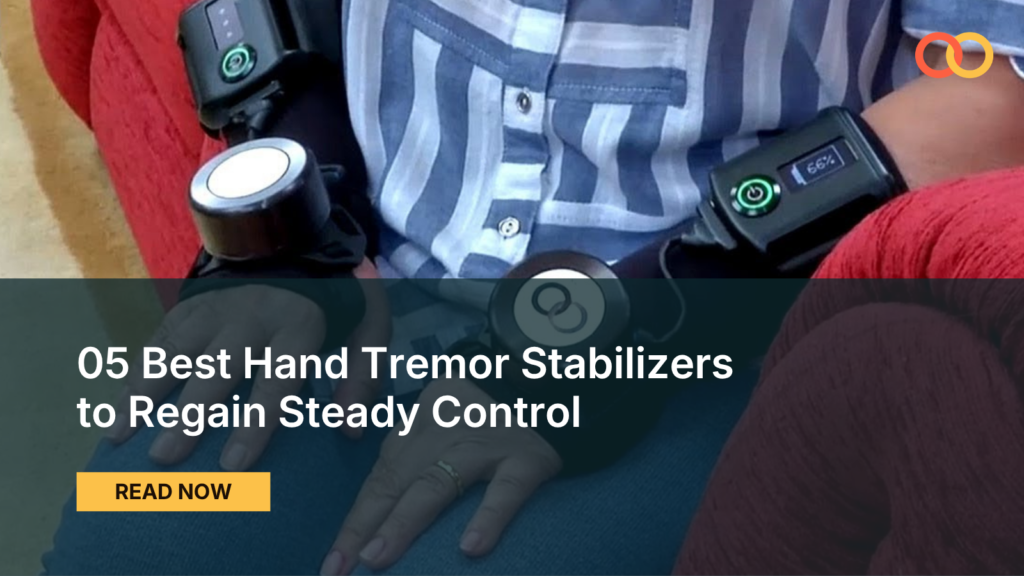
Understanding how a hand tremor stabilizer works is the key to choosing the right one. Active devices like GyroGlove use spinning gyroscopes to generate angular momentum that counteracts involuntary movement the instant it begins — think of it as noise-canceling headphones, but for your hands. Passive devices, by contrast, add weight or dampening material to slow tremors down. The mechanism determines everything: response speed, tremor reduction rate, comfort, and who benefits most.
Choosing the right device requires more than reading a spec sheet. Below, this guide walks through the top 5 devices in full detail, explains the science behind each technology, breaks down device types, and gives you a clear framework for picking the one that fits your life — whether you are managing Parkinson’s disease, Essential Tremor, or caring for someone who is.
What Are the Best Hand Tremor Stabilizers in 2026?
Below is a full breakdown of each device, organized by performance tier so you can find the option that matches your condition, lifestyle, and budget.
GyroGlove by Gyrogear
GyroGlove is the most technologically advanced hand tremor stabilizer available in 2026, and it is the only wearable device that uses active gyroscopic stabilization to counteract tremors in real time — not slow them down, but actively cancel them as they happen.
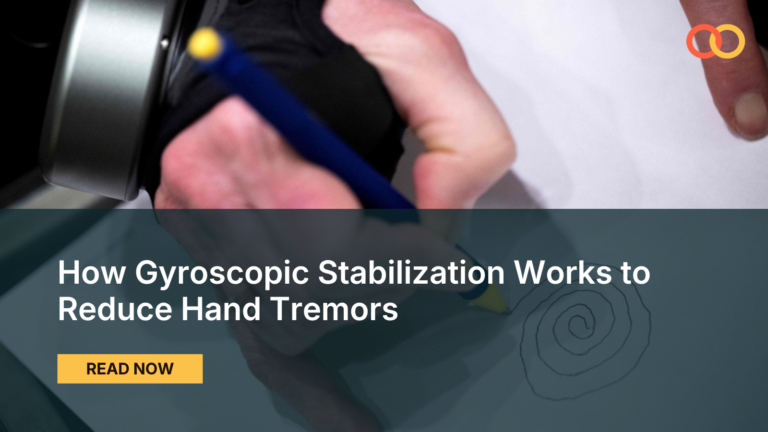
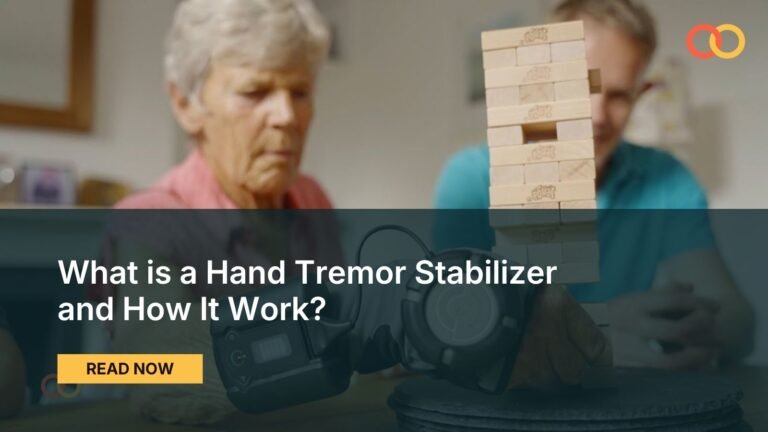
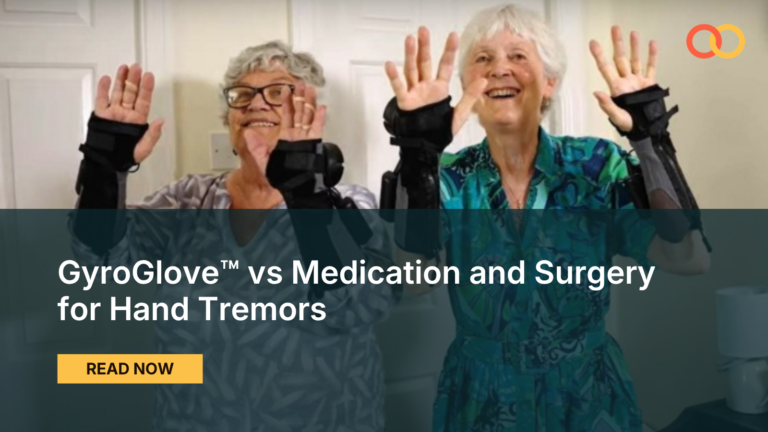
At the heart of GyroGlove is a miniaturized, high-performance gyroscope embedded in a lightweight stabilization module worn on the back of the hand. When the gyroscope spins, it generates angular momentum — a physical force that resists sudden directional changes. The moment a tremor impulse begins, the gyroscope’s angular momentum pushes back against it. This counter-action happens in milliseconds, providing immediate stability to the hand and fingers, resulting in a noticeable reduction in hand tremors and allowing for smoother, more controlled movement.
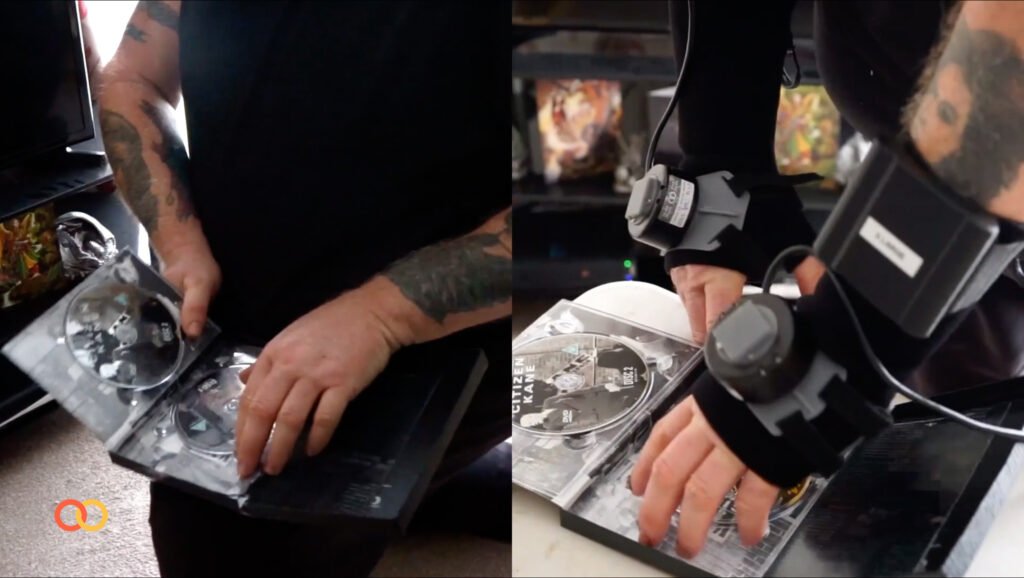
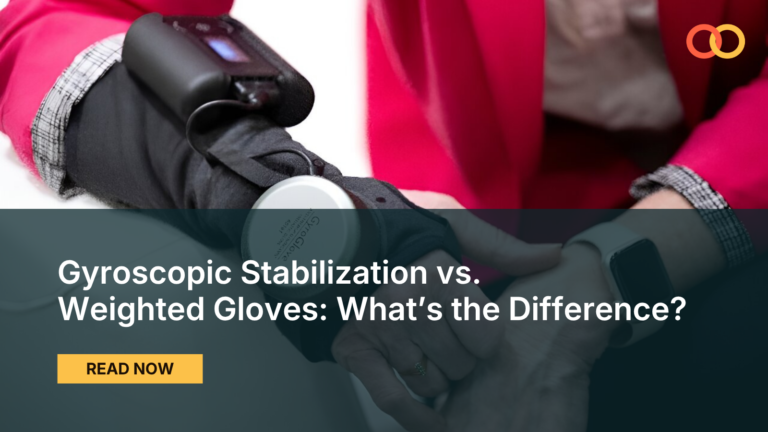
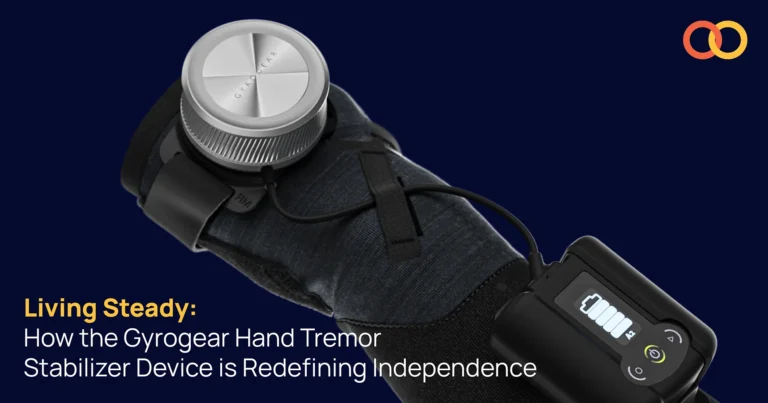
GyroGlove is composed of a fabric glove, a gyroscope in the stabilization module, and a battery pack on the forearm. Designed to be user-friendly for people with hand tremors, the device weighs approximately 1.27 pounds and includes features like large buttons and a clear display screen for ease of use. For older adults managing tremor, those large buttons and the clear display are not just conveniences — they are essential design choices.
Key specifications:
- Technology: Active gyroscopic stabilization (angular momentum)
- Response time: Milliseconds
- Target conditions: Parkinson’s Disease (resting tremor), Essential Tremor (postural/action tremor)
- FDA status: FDA-registed class I medical device
- Weight: ~1.27 lbs (575g)
- Notable recognition: TIME’s Best Inventions of 2024
- Availability: Ships within the United States
Real-world impact: For Roberta Wilson-Garrett, a Parkinson’s patient using GyroGlove at CES 2024, tasks like buttoning a shirt, moving a cup of coffee, and writing a note had become easier with the device.
In laboratory testing supported by Innovate UK, GyroGlove demonstrated a 50% reduction in tremor in half of tests, and as much as 95% reduction in one case. A pilot clinical study presented at the International Neurology Congress 2023 found that GyroGlove showed a fourfold improvement in the Volumetric Measurement Assessment test and an ADL burden reduction of 48% to 63% compared to no-device conditions — meaning patients spilled less, wrote better, and handled daily tasks with measurably greater control.
Steadi-3 by Steadiwear
Steadi-3 is the hand tremor stabilizer for users who prefer a maintenance-free, passive stabilization device — particularly those with mild tremors who do not require the dynamic adaptive response of a gyroscopic system.
Unlike GyroGlove’s active gyroscope, the Steadi-3 works by using a precisely engineered mass inside the stabilization module that moves in opposition to the tremor’s direction — absorbing and dissipating the tremor energy before it reaches the fingers. Because it requires no power source, the Steadi-3 can be worn from morning to night without interruption.
Key specifications:
- Technology: Passive tuned mass damper
- Battery: None required (fully passive)
- Target conditions: Essential Tremor, mild Parkinson’s tremor
- Best activity: Writing, eating, drinking, everyday tasks
- Availability: Ships within the United States
Key limitations to consider: Because its stabilization mechanism is passive and fixed, the Steadi-3 does not adapt to fluctuating tremor intensity in real time. Users whose tremors vary significantly throughout the day, or who experience moderate-to-severe shaking, may find the device’s response insufficient during peak tremor episodes.
Tremelo by Five Microns
Tremelo is the hand tremor stabilizer designed for patients who need a functional, non-invasive tremor reduction device at a lower price point and are comfortable with a forearm-sleeve form factor. Developed at California State University, Fresno, by Dr. Nguyen and his team, the Tremelo uses Tuned Mass Damper (TMD) technology — a built-in small internal mass that shakes against the direction of the tremor, absorbing vibrational energy through mechanical opposition.
Tremelo’s design targets the 4–12 Hz frequency band where Essential Tremor most commonly occurs. The internal mass is tuned to resonate at exactly the right counter-frequency, absorbing the tremor energy at the source. This frequency-specific approach is what allows Tremelo to claim an 85–90% tremor reduction rate in clinical testing — a figure consistently cited across its published materials and independent reviews.
Key specifications:
- Technology: Tuned Mass Damper (frequency-specific)
- Tremor reduction: 85–90% (clinical testing)
- Target conditions: Essential Tremor (mild to severe)
- Non-invasive: 100%, drug-free
Best for: Patients with moderate to severe Essential Tremor who want a scientifically calibrated passive device at a lower price point than GyroGlove.
Important trade-offs to note: The Tremelo’s bulk and forearm-mounted design make it less suited for fine motor precision tasks than a hand-mounted device like the GyroGlove. Users in social or professional settings may also find the sleeve’s profile less discreet. For users primarily focused on eating and drinking stability at home, and for whom budget is a primary constraint, the Tremelo offers accessible functional relief. For users who need consistent fine motor dexterity, portability, and all-day wearability in varied settings, the GyroGlove remains the stronger choice.
Readi-Steadi Orthotic Glove
Readi-Steadi is the best entry-level hand tremor stabilizer for patients with mild to moderate tremor who want an affordable, immediate solution without electronics or charging, functioning as a weighted orthotic glove that adds distributed resistance across the hand.
The Readi-Steadi works on a simple principle: by adding carefully distributed weight across the palm and fingers, it increases the inertia of the hand, making small tremor movements harder to initiate. It does not cancel tremors actively, but it meaningfully slows their visible effect, particularly for people whose tremors are in the mild to moderate range.
Key specifications:
- Technology: Weighted orthotic (passive)
- Tremor reduction: 30–50% (mild to moderate tremor)
- Target conditions: Essential Tremor, mild Parkinson’s, age-related tremor
- Machine washable: Yes
The device’s primary advantage is its clinical adaptability: weights can be added or removed to precisely match a patient’s current tremor severity, and the fit can be adjusted as the disease progresses. Available in multiple colors and waterproof options, the Readi-Steadi is designed for all-day wear in both private and social settings. Critically, because proper fitting requires individual calibration by a trained therapist, the Readi-Steadi is not well-suited to self-purchase and use without professional guidance. For patients already in a supervised rehabilitation program, it is a highly personalized option.
Cala kIQ
The Cala kIQ is designed for patients who are already engaged with a neurologist or movement disorder specialist and are seeking a clinically supervised therapy option covered by insurance. As the FDA-cleared wearable device for action hand tremor in Essential Tremor and Parkinson’s Disease, the Cala kIQ delivers Transcutaneous Afferent Patterned Stimulation (TAPS therapy) — precisely timed electrical pulses that reach peripheral nerves through the skin of the wrist.
Clinical studies published in peer-reviewed journals including Movement Disorders and Frontiers in Neuroscience have demonstrated statistically significant tremor reduction with TAPS therapy, with effects lasting up to one hour post-treatment. The device is covered by Medicare for qualifying patients and by the VA for Veterans, making it financially accessible for those who meet the criteria.
However, the Cala kIQ’s clinical positioning creates a significant access barrier: users cannot purchase it directly. The process requires a physician referral, assessment, prescription completion, and insurance verification — a pathway that can take weeks to navigate. For individuals who want to begin managing their hand tremors today without medical gatekeeping, the GyroGlove provides an immediate, over-the-counter alternative that requires no appointment, no forms, and no waiting period.
How Does the GyroGlove Compare to Other Tremor Devices in Real-World Use?
In real-world daily use — as distinct from laboratory benchmarking — the GyroGlove’s advantages over competing devices become most apparent in three areas: adaptability to variable tremors, comfort for extended wear, and social unobtrusiveness.
Adaptability: Tremor severity is rarely constant. It fluctuates with fatigue, stress, medication timing, caffeine intake, and emotional state. Passive devices like the Steadi-3 or Tremelo respond to tremors with a fixed mechanical resistance — effective when tremors are predictable, but less responsive when they intensify suddenly. The GyroGlove’s gyroscope responds dynamically to each tremor event, providing consistent stabilization regardless of how the tremor behaves in any given moment.
Comfort for extended wear: The GyroGlove’s ergonomic, lightweight glove design is engineered for all-day use — up to 8 hours per charge — without causing the hand fatigue that weighted orthotic gloves can produce over time. The Tremelo sleeve, while effective, adds forearm bulk that can become cumbersome during extended activity.
Social comfort: The GyroGlove’s appearance as a wearable glove makes it far more socially neutral than a forearm sleeve or medical brace. For users who want to manage their tremors discreetly in professional, social, or public environments, the GyroGlove’s form factor is significantly more normalized and less medically conspicuous
Does Insurance, FSA, or HSA Cover the Cost of the GyroGlove?
Insurance, FSA, and HSA coverage for the GyroGlove depends on the specific plan, but several practical funding pathways exist that can reduce the out-of-pocket cost significantly.
- FSA (Flexible Spending Account): The GyroGlove may qualify as an FSA-eligible expense if purchased for the treatment or management of a diagnosed medical condition such as Essential Tremor or Parkinson’s Disease. Users should confirm eligibility with their FSA administrator and obtain a Letter of Medical Necessity from their physician if required.
- HSA (Health Savings Account): Similar eligibility criteria apply to HSA purchases — a physician’s documentation of the medical necessity of the device strengthens the claim.
- Private insurance: Coverage by commercial insurance plans varies widely. Contacting the insurer directly with the device’s product information and a physician’s recommendation is the recommended first step.
- VA (Veterans Administration): Veterans with service-connected tremor conditions may be eligible for assistive device funding through the VA — speaking with a VA patient advocate is the recommended starting point.
Gyrogear’s team can provide supporting documentation to assist with insurance and FSA/HSA reimbursement claims. Prospective buyers are encouraged to visit the official Gyrogear website to review current pricing, financing options, and available documentation for coverage applications. Taking this step before purchase can meaningfully reduce the financial barrier to accessing the most advanced hand tremor stabilization technology available in 2026