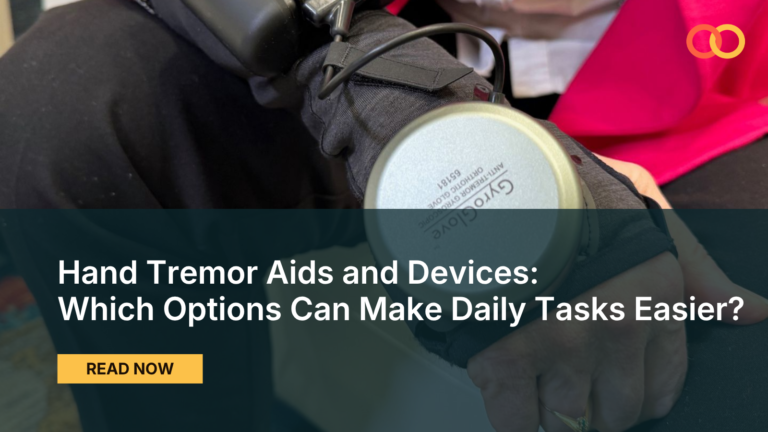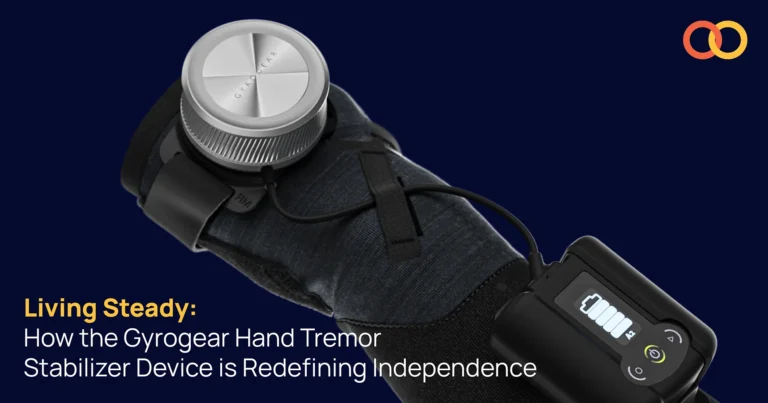

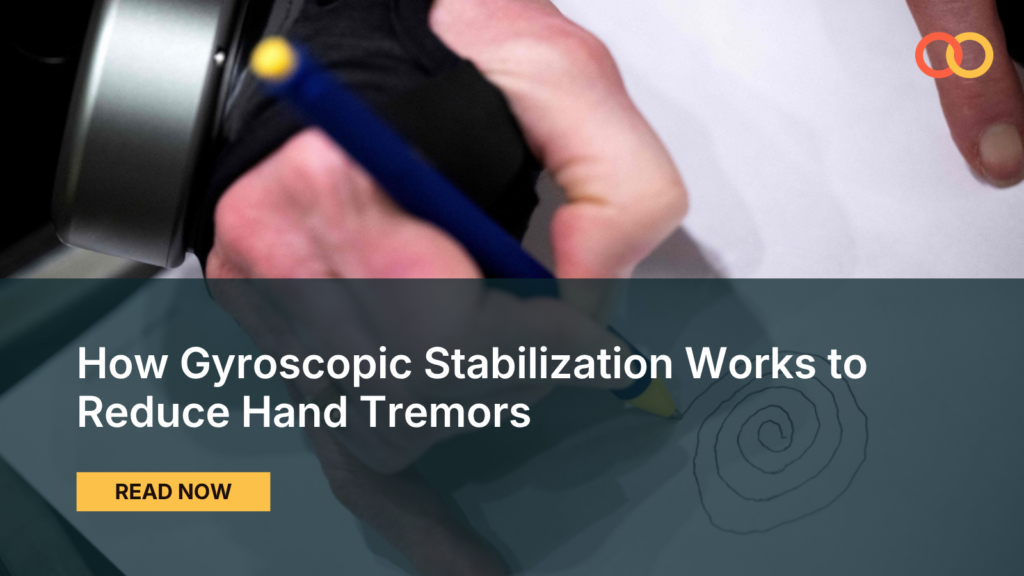
In GyroGlove™, this same principle is used in a wearable hand stabilizer designed to help reduce the effect of hand tremors during everyday activities. The goal is not to lock the hand in place. The goal is to help the hand feel more stable while still allowing natural movement.
GyroGlove™ is designed as a non-invasive, drug-free tremor support option. It does not replace medication, surgery, or advice from a healthcare professional. Instead, it supports the physical movement of the hand by helping counteract involuntary shaking.
To understand how GyroGlove™ works, it helps to first understand the basic idea behind gyroscopic stabilization. Then we can look at how this technology is applied to hand tremor support in daily life.
What Is Gyroscopic Stabilization?
Gyroscopic stabilization is a motion-control method that uses a spinning gyroscope to resist unwanted movement and help keep something steadier.
A gyroscope is a part that spins very quickly. When it spins, it naturally resists sudden changes in direction. This resistance is what creates the stabilizing effect.
In everyday terms, you can think of gyroscopic stabilization as a steadying force. If the hand starts to shake, the gyroscope helps push back against that unwanted motion. This does not mean the hand becomes stiff or locked. It means the shaking movement may become less disruptive.
For people with hand tremors, this matters because tremor is a movement problem that affects daily function. A steadier hand can make common activities feel easier and less stressful.
What Is a Gyroscope?
A gyroscope is a spinning device that tends to keep its direction stable while it rotates.
A gyroscope usually has a rotating part inside it. When that part spins at high speed, it creates a force that resists sudden changes in direction. This is why gyroscopes are often used in systems that need stability.
The same basic principle can be used to support a person’s hand. When the hand shakes, the spinning gyroscope resists some of that unwanted motion. This can help the hand feel steadier during movement.
You do not need to understand advanced physics to understand the benefit. The key idea is simple: a spinning gyroscope naturally resists unstable motion.
What Does Stabilization Mean in Hand Tremor Reduction?
Stabilization in hand tremor reduction means helping reduce unwanted shaking while still allowing the person to move the hand intentionally.
Stabilization does not mean stopping all movement. A person still needs to pick up objects, drink, eat, write, and use the hand naturally. A good tremor support device should help reduce shaking without making the hand feel unusable.
This is an important distinction. Hand tremor support is not the same as curing the cause of tremor. Gyroscopic stabilization works at the movement level. It helps manage the visible shaking of the hand, not the underlying neurological condition.
For that reason, GyroGlove™ should be understood as a wearable support device. It is designed to help with daily hand control, not to replace medical diagnosis or treatment.
Read more: What Causes Hand Tremors in Older Adults?
How Does Gyroscopic Stabilization Work to Reduce Hand Tremors?
Gyroscopic stabilization reduces hand tremors by creating mechanical resistance against involuntary hand movement.
To understand this clearly, the process can be explained in four simple steps:
- A gyroscope spins quickly.
- The spinning motion creates stability.
- The gyroscope resists sudden changes in direction.
- This resistance helps counteract unwanted hand shaking.
When a person’s hand begins to shake, the gyroscope works against the unstable motion. The hand can still move, but the tremor may feel less disruptive.
This is why gyroscopic stabilization is useful for daily activities. Even a small improvement in steadiness can make it easier to drink from a cup, hold a fork, write a note, or use a phone.
How Does Angular Momentum Create Stability?
Angular momentum creates stability because a spinning object naturally wants to keep moving in the same direction.
Angular momentum is the physics principle behind the gyroscopic effect. When the gyroscope inside a device spins, it becomes harder to suddenly change its direction. That resistance helps create a stabilizing force.
For someone with hand tremors, this stabilizing force can help oppose involuntary shaking. The device does not need to understand the cause of the tremor. It simply responds mechanically to unwanted movement.
A simple way to explain it is this: the faster and more consistently the gyroscope spins, the more it can help resist unstable movement.
How Does Gyroscopic Resistance Counteract Tremor Motion?
Gyroscopic resistance counteracts tremor motion by pushing back against repeated, unwanted shaking of the hand.
Hand tremor often appears as small, repeated movements. These movements may go side to side, up and down, or in more complex patterns. Even when the movement is small, it can make daily tasks difficult.
Gyroscopic resistance helps by creating a steadying effect against those repeated movements. It does not work like a medication. It does not send signals to the brain. Instead, it gives the hand mechanical support.
This makes gyroscopic stabilization especially relevant for a wearable hand stabilizer like GyroGlove™. The technology addresses the physical movement of the hand in real time.
Does Gyroscopic Stabilization Stop Tremors Completely?
No, gyroscopic stabilization does not completely stop or cure tremors. It helps reduce the effect of tremors, supports steadier hand movement, and may make daily activities easier.
However, a device does not need to cure tremor to be useful. For many people, the real challenge is daily function. Can they drink with less spilling? Can they write more clearly? Can they hold utensils with more confidence?
Gyroscopic stabilization is best understood as a support tool. It may help make the hand feel steadier, but results can vary from person to person.
This is also why people with tremors should continue to speak with their healthcare provider about diagnosis, treatment options, and long-term care.
Read more: Hand Tremor Treatment Options: Medication, Surgery, and Wearable Support
What Types of Hand Tremor Movement Can Gyroscopic Stabilization Help Reduce?
Gyroscopic stabilization may help reduce different types of unwanted hand movement, including side-to-side shaking, up-and-down motion, and mixed tremor patterns.
Below is a simple way to understand common hand tremor movement patterns. This section is not meant to diagnose a medical condition. It simply explains how movement direction relates to stabilization.
Individual results can vary based on tremor type, severity, fit, and how the device is used.
Suggested for you: Types of Hand Tremors: Essential Tremor, Parkinsonian Tremor, and Action Tremor
Can Gyroscopic Stabilization Help with Side-to-Side Hand Shaking?
Yes, gyroscopic stabilization can help resist side-to-side hand shaking by opposing unwanted lateral movement.
Side-to-side shaking can make it difficult to move a spoon, hold a pen, or bring a cup to the mouth. These tasks require controlled hand direction.
When the hand moves left and right unintentionally, the gyroscope can help resist that motion. This may make the hand feel steadier during daily use.
The level of support can depend on the person’s tremor pattern and how well the device fits.
Can Gyroscopic Stabilization Help with Up-and-Down Tremor Motion?
Yes, gyroscopic stabilization can help resist up-and-down tremor motion by opposing repeated vertical changes in hand direction.
Up-and-down movement can be especially noticeable when holding a cup, using utensils, or writing on a surface. These tasks require the hand to stay steady in space.
Gyroscopic stabilization helps by resisting sudden directional changes. This may reduce the visible effect of vertical shaking and support better control during everyday activities.
The goal is not to remove all movement. The goal is to make useful movement easier.
Can Gyroscopic Stabilization Support Voluntary Hand Movement?
Yes, gyroscopic stabilization can support voluntary hand movement because it is designed to reduce unwanted shaking while still allowing intentional motion.
People need their hands to move naturally. A tremor support device should not make the hand feel stuck. It should help reduce the shaking that interferes with purposeful movement.
This balance is central to wearable tremor support. The person remains in control of the action. The device helps reduce the unwanted movement that gets in the way.
For older adults, this can be especially important because comfort, ease of use, and natural hand movement all affect whether a device feels practical in daily life.
Suggested for you: What Is a Hand Tremor Stabilizer and Who Is It For?
How Is Gyroscopic Stabilization Used in GyroGlove™?
Gyroscopic stabilization is used in GyroGlove™ as the core technology that helps support steadier hand movement.
GyroGlove™ applies the stabilizing effect of a gyroscope in a wearable form. Instead of being a large machine or a fixed support, it is designed to be worn on the hand and wrist during daily activities.
GyroGlove™ is positioned as a wearable hand stabilizer for people with hand tremors. It uses gyroscopic stabilization to help counteract involuntary hand movement and support better control.
This makes the product different from simple braces or weighted gloves. The key technology is not just support or added weight. It is the gyroscopic force that helps resist unwanted movement.
What Role Does the Gyroscopic Stabilization Unit Play in GyroGlove™?
The gyroscopic stabilization unit is the main part of GyroGlove™ that helps create the steadying effect.
The gyroscope inside the device spins and produces resistance against unwanted motion. When the hand shakes, that resistance helps counteract the movement.
This is the core reason GyroGlove™ is described as a gyroscopic hand stabilizer. The glove or wearable structure helps place the technology on the hand, but the gyroscopic unit provides the stabilizing principle.
For readers, the simplest explanation is this: the gyroscope is the part that helps the hand feel steadier.
How Does GyroGlove™ Transfer Stabilization to the Hand?
GyroGlove™ transfers stabilization to the hand through its wearable design, which helps connect the stabilizing force to the user’s hand and wrist.
Mechanical support only works well when the device stays in the right position. If a stabilizing device shifts too much, the hand may not receive the full benefit.
That is why fit and design matter. The wearable structure helps keep the stabilizing unit close to the hand so the gyroscopic resistance can support real movement.
This connection between technology and fit is important for daily use. A device needs to feel secure enough to help, but comfortable enough to wear.
Why Does Fit Matter in a Wearable Tremor Stabilizer?
Fit matters because a wearable tremor stabilizer needs secure contact to transfer support effectively and enough comfort for daily use.
Older adults may care about more than technology. They may ask: Is it comfortable? Is it easy to wear? Does it interfere with my hand? Can I use it during normal activities?
A good fit helps answer those concerns. If the device is too loose, the stabilizing effect may feel weaker. If it is too tight or uncomfortable, the person may not want to use it.
For GyroGlove™, fit is part of the overall experience. It supports both stabilization and usability.
Read more: How to Choose a Tremor Stabilizer for Daily Hand Tremor Support
What Happens When Someone with Hand Tremors Uses GyroGlove™?
When someone with hand tremors uses GyroGlove™, the device helps resist unwanted shaking so the hand may feel steadier during daily tasks.
The user still controls the hand. GyroGlove™ does not move the hand for the person. Instead, it helps reduce the disruptive motion that tremor can create.
This is important because hand tremors often affect confidence as much as movement. A person may avoid drinking in public, signing documents, eating with others, or doing hobbies they used to enjoy. A steadier hand may help restore a sense of control in these moments.
GyroGlove™ should be described in this practical context: helping people do everyday activities with more steadiness and confidence.
How Does GyroGlove™ Respond When the Hand Starts to Shake?
GyroGlove™ responds to hand shaking by using gyroscopic resistance to oppose unwanted movement and support steadier hand control.
When tremor-related movement happens, the gyroscope resists sudden changes in hand direction. This resistance may help reduce how much the tremor affects the user’s action.
For example, if a person is trying to hold a cup and the hand begins to shake, the device helps counteract the unwanted motion. The person still holds the cup. The device simply supports steadier control.
The safest wording is that GyroGlove™ helps support hand stabilization. It should not be described as diagnosing, treating, or curing the medical cause of tremor.
Which Daily Activities Can Gyroscopic Hand Stabilization Support?
Gyroscopic hand stabilization may support daily activities that require steadier hand control, such as writing, eating, drinking, holding objects, and using utensils.
Hand tremors can make small tasks feel difficult. A person may struggle to sign a check, drink coffee, use a fork, hold a phone, or handle small household items.
GyroGlove™ is relevant because it supports the movement needed for these everyday tasks. It does not need to cure tremor to be meaningful. If the hand feels steadier during important daily moments, the support can be valuable.
Common activities that may benefit from steadier hand control include:
- Writing or signing documents
- Eating with utensils
- Drinking from a cup
- Holding a phone
- Using household tools
- Handling small objects
- Enjoying hobbies that require hand control
Read more: How Hand Tremors Affect Daily Activities and Independence
Is GyroGlove™ a Drug-Free and Non-Invasive Tremor Support Option?
Yes, GyroGlove™ is positioned as a drug-free and non-invasive tremor support option because it is wearable, mechanical, and does not require surgery or medication.
This helps people understand where GyroGlove™ fits. It is not a medication. It is not a surgical treatment. It is a wearable device designed to support steadier hand movement.
This distinction is especially important for readers who may already be discussing medical options with a doctor. GyroGlove™ may be considered alongside a broader care plan, but it should not replace professional medical advice.
People with tremors should speak with a qualified healthcare provider before changing medications, stopping treatment, or making decisions about surgery.
Why Is Gyroscopic Stabilization Suitable for Wearable Hand Tremor Support?
Gyroscopic stabilization is suitable for wearable hand tremor support because it acts directly on unwanted movement, which is the visible problem people experience during daily tasks.
Tremor may have a neurological cause, but its daily impact often appears as movement. The hand shakes. The cup spills. The writing becomes difficult. The spoon feels harder to control.
Gyroscopic stabilization addresses that movement level. It helps resist unwanted motion while allowing the person to continue using the hand.
This makes the technology well suited for a wearable hand stabilizer. It connects a physical problem, hand shaking, with a physical support mechanism, gyroscopic resistance.
Why Does Mechanical Stabilization Matter for Hand Tremors?
Mechanical stabilization matters because hand tremors affect movement, and a mechanical device can help support the hand at the movement level.
The cause of tremor may come from the nervous system, but the challenge many people notice is physical. The hand moves when they do not want it to move.
A mechanical support device like GyroGlove™ helps at this practical level. It does not claim to change the brain or cure the medical condition. It helps manage the movement that interferes with everyday life.
This is a clear and trustworthy way to explain the product. It focuses on functional hand support rather than making medical claims.
Why Is Real-Time Stabilization Important for Tremor Support?
Real-time stabilization is important because tremors often interfere while a person is actively using the hand.
Tremor can become most frustrating during the exact moment someone needs control. This may happen while eating soup, pouring a drink, writing a note, or holding a small object.
A wearable stabilizer is useful because it supports the hand during those real-life moments. The device is not just about technology. It is about helping the person feel more steady when the hand is being used.
For older adults, this practical benefit matters. The value of stabilization is not only measured in technical terms. It is measured in whether daily activities feel easier, safer, and more manageable.
How Is Gyroscopic Stabilization Different from Other Tremor Reduction Methods?
Gyroscopic stabilization differs from other tremor reduction methods because it uses mechanical resistance from a spinning gyroscope rather than medication, surgery, simple weight, or passive support.
This comparison helps readers understand what makes GyroGlove™ different. The main article explains how the technology works. This section explains how it fits among other tremor support options.
How Is Gyroscopic Stabilization Different from Weighted Gloves or Passive Dampers?
Gyroscopic stabilization is different from weighted gloves because it uses rotational resistance, while weighted gloves mainly rely on added weight.
Weighted gloves may help some people by making the hand heavier. However, added weight may also cause fatigue or feel uncomfortable for some users. Passive dampers also work differently because they absorb or reduce motion without using the gyroscopic principle.
GyroGlove™ is better understood as a wearable stabilizer that uses gyroscopic resistance, not simply added weight.
Read more: Gyroscopic Stabilization vs Weighted Gloves: What’s the Difference?
How Is GyroGlove™ Different from Medication or Surgical Tremor Treatments?
GyroGlove™ is different from medication and surgery because it supports hand movement mechanically rather than treating tremor through drugs or an invasive procedure.
Medication and surgery are medical treatment options that should be discussed with a healthcare professional. GyroGlove™ is a non-invasive, drug-free wearable support option for hand tremors.
This distinction helps set the right expectation. GyroGlove™ supports steadier hand function, but it does not replace diagnosis, medical care, or clinical treatment advice.
A Steadier Hand Starts with the Right Support
Gyroscopic stabilization helps reduce the effect of hand tremors by using a spinning gyroscope to resist unwanted hand movement. In GyroGlove™, this principle is applied in a wearable hand stabilizer designed to support steadier movement during everyday activities like writing, eating, drinking, and holding objects.
GyroGlove™ does not cure tremors or replace medical care. Instead, it offers a non-invasive, drug-free way to support hand control at the movement level. For many people, that kind of support can make daily tasks feel more manageable and help restore confidence in moments that matter.
If hand tremors are making everyday activities harder, GyroGlove™ may help you experience greater steadiness, comfort, and control.
Explore GyroGlove™ today and learn how wearable gyroscopic stabilization can support a steadier hand in daily life.