
This difference matters for people living with hand tremors because daily comfort, hand fatigue, and movement control can affect whether a device feels helpful in real life. A tremor support option should not only reduce shaking. It should also help with everyday activities like writing, eating, drinking, holding a phone, or using utensils.
Weighted gloves may be useful for some people because they are simple and passive. However, added weight can also make the hand feel tired or less flexible. Gyroscopic stabilization is different because its main steadying effect comes from mechanical resistance, not from simply making the hand heavier.
This article explains the key differences between gyroscopic stabilization and weighted gloves, how each option works, and who may benefit more from each type of tremor support.
What Is the Main Difference Between Gyroscopic Stabilization and Weighted Gloves?
The main difference is that gyroscopic stabilization uses mechanical resistance from a spinning gyroscope, while weighted gloves use added weight to reduce visible shaking.
Both options aim to support steadier hands, but they do not use the same method. Weighted gloves work by adding mass to the hand. Gyroscopic stabilization works by resisting unwanted movement.
In simple terms, weighted gloves make the hand heavier. Gyroscopic stabilization helps the hand resist unstable motion.
The table below shows the core differences between the two options.
| Feature | Gyroscopic Stabilization | Weighted Gloves |
|---|---|---|
| Main mechanism | Uses resistance from a spinning gyroscope | Uses added weight |
| Type of support | Mechanical stabilization | Passive dampening |
| Main goal | Help resist unwanted hand movement | Help reduce shaking by adding load |
| Daily use concern | Fit, comfort, and usability | Hand fatigue and reduced dexterity |
| Best understood as | A stabilization technology | A passive weighted aid |
This does not mean one option is right for everyone. The better choice depends on the person’s tremor pattern, hand strength, daily activities, comfort, and medical guidance.
How Do These Two Tremor Support Methods Work Differently?
These two methods work differently because gyroscopic stabilization resists movement changes, while weighted gloves dampen movement by adding mass.
Weighted gloves are based on a simple idea: when the hand is heavier, small tremor movements may become less noticeable. This may help some people during short or simple tasks.
Gyroscopic stabilization uses a different approach. A spinning gyroscope creates resistance against unwanted movement. Instead of relying mainly on extra weight, it helps oppose the motion that makes the hand shake.
Read deeper explanation of the technology: How Gyroscopic Stabilization Works to Reduce Hand Tremors in GyroGlove™.
Are Gyroscopic Stabilization and Weighted Gloves Used for the Same Purpose?
Yes, both are used to support steadier hand movement, but they are not the same type of tremor support.
Both options may interest people who want non-invasive support for hand tremors. Both may help during daily activities. Both are meant to make hand movement feel more manageable.
However, the user experience can be different. Weighted gloves may feel simple and familiar, but the extra weight can be tiring. Gyroscopic stabilization may offer more active movement support because it is designed to resist unwanted motion rather than simply add load.
What Are Weighted Gloves for Hand Tremors?
Weighted gloves are wearable gloves that add weight to the hand to help dampen shaking.
Weighted gloves are a simple, passive type of tremor support. They do not use a gyroscope. They do not actively respond to movement direction. Their main function is to make the hand heavier so small shaking movements may feel less pronounced.
Some people may find weighted gloves helpful for short tasks. Others may find them uncomfortable, tiring, or limiting, especially if they already have reduced hand strength or joint discomfort.
How Do Weighted Gloves Help Reduce Hand Shaking?
Weighted gloves may help reduce hand shaking by increasing the weight of the hand, which can dampen small tremor movements for some users.
The concept is easy to understand. A heavier hand may move less in response to small tremor movements. This can sometimes make the hand feel more stable.
However, results can vary. Weighted gloves do not adapt to different movement directions. They do not actively resist tremor motion. They simply add weight.
This means they may help some people in certain situations, but they may not provide enough support for tasks that require fine control.
What Are the Limitations of Weighted Gloves?
Weighted gloves may be limited by hand fatigue, reduced dexterity, comfort issues, and the fact that they rely on added weight.
The main concern is fatigue. Added weight may feel manageable at first, but it can become tiring during a full meal, a longer writing task, or repeated daily use.
Weighted gloves may also affect dexterity. Fine motor tasks require small, controlled movements. If the glove feels bulky or heavy, it may become harder to button a shirt, sign a document, use a phone, or handle small objects.
This does not mean weighted gloves are never useful. They may still be reasonable for people who want simple support for short activities. But for older adults or people with weaker hands, added weight is an important factor to consider.
What Is Gyroscopic Stabilization for Hand Tremors?
Gyroscopic stabilization is a tremor support method that uses a spinning gyroscope to resist unwanted hand movement and support steadier control.
This explanation does not need to be overly technical. The key point is that gyroscopic stabilization is not the same as making the hand heavier. It uses mechanical resistance from rotational motion.
In a wearable hand stabilizer, this resistance can help counteract involuntary shaking while still allowing the person to move the hand intentionally.
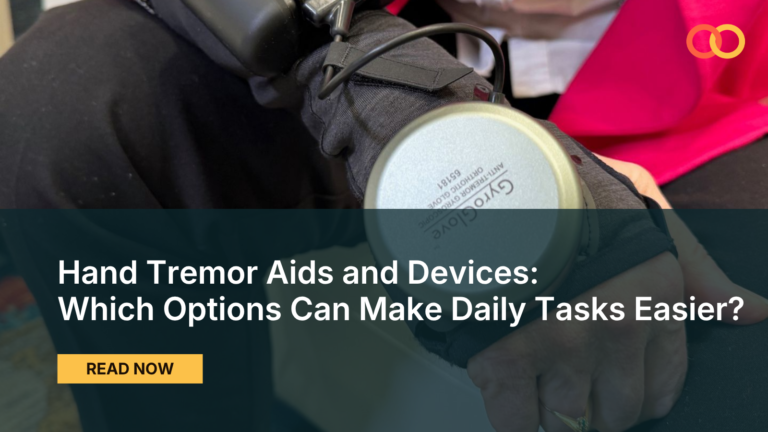
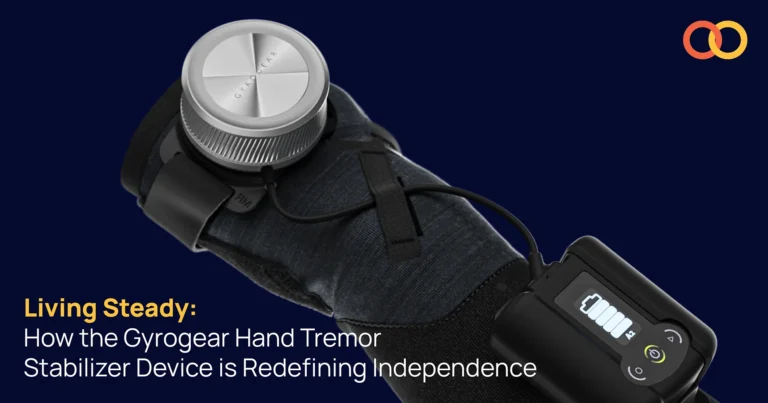
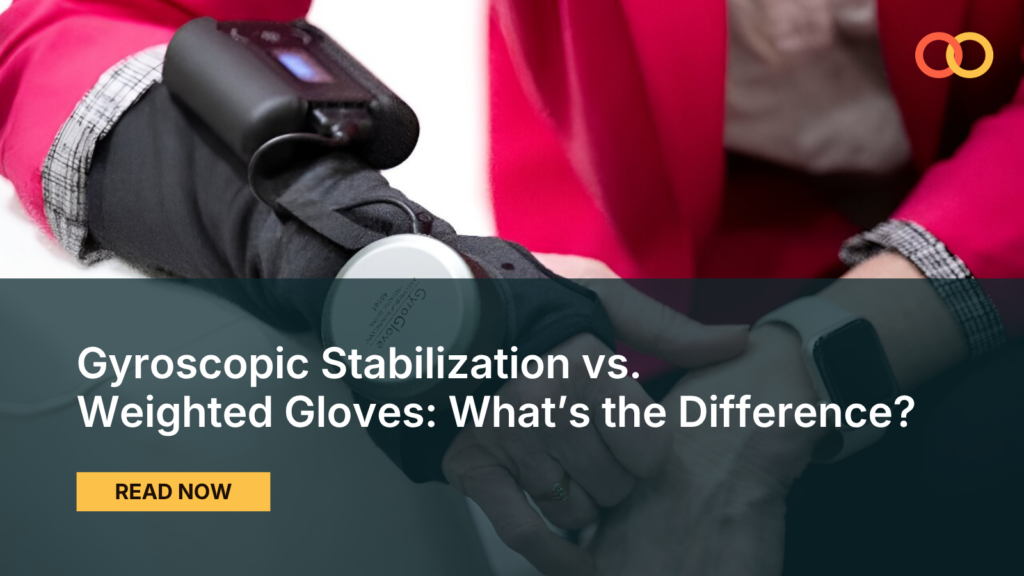
GyroGlove™ applies this principle in a wearable hand stabilizer designed to support people with hand tremors. It is a non-invasive, drug-free support option. It is not a medication, surgery, or cure for tremors.
How Does Gyroscopic Stabilization Support the Hand Without Simply Adding Weight?
Gyroscopic stabilization supports the hand through rotational resistance, not by relying mainly on added weight.
Any wearable device has some physical weight. However, the key difference is the support mechanism. A weighted glove works mainly because it adds load to the hand. A gyroscopic stabilizer works because the spinning gyroscope resists unwanted movement.
This distinction is important for daily use. A support device should help the hand feel steadier without making normal tasks unnecessarily tiring.
For people concerned about hand fatigue, this difference may be especially relevant.
How Does GyroGlove™ Use Gyroscopic Stabilization?
GyroGlove™ uses gyroscopic stabilization in a wearable hand stabilizer to help counteract involuntary hand movement during daily activities.
GyroGlove™ is designed to be worn on the hand and wrist. Its gyroscopic stabilizing unit helps create resistance against unwanted motion. The wearable design helps transfer that stabilizing effect to the hand.
This means GyroGlove™ should not be understood as a weighted glove. Its core difference is the use of gyroscopic stabilization.
Learn more about the product: Learn how GyroGlove™ works.
Which Is Better for Daily Hand Tremor Support?
Gyroscopic stabilization may be better for active daily movement support, while weighted gloves may be simpler for basic passive dampening.
The better option depends on what the person needs. Some people want a simple aid for short tasks. Others need support during active movement, such as eating, drinking, writing, or holding objects.
For older adults, the decision should focus on real-life use. A tremor support device should feel comfortable, manageable, and helpful during the activities that matter most.
Which Option Works Better for Daily Activities?
Gyroscopic stabilization may work better for active daily activities because it supports movement control rather than only adding weight.
Writing requires fine hand control. Eating requires hand-to-mouth movement. Drinking requires a steady grip and controlled lifting. These tasks involve movement, not just stillness.
Weighted gloves may help reduce shaking for some people, but added weight can also make fine movements harder. A heavier hand may feel more stable at first, but it may also feel less precise.
Gyroscopic stabilization is designed to support steadier movement during active use. This makes it especially relevant for daily tasks where the hand must move with control.
Which Option May Cause More Hand Fatigue?
Weighted gloves may cause more hand fatigue for some users because they add load to the hand and wrist.
Fatigue matters because tremor support is often needed during normal routines. A device that feels fine for one minute may feel tiring after a full meal, a longer writing task, or repeated household activities.
This does not mean weighted gloves always cause discomfort. Some people may tolerate them well, especially for short tasks. But added weight is a real concern for older adults, people with arthritis, or people with reduced grip strength.
Gyroscopic stabilization is different because its main support mechanism is not simply making the hand heavier. Comfort still depends on fit, design, and individual tolerance, but the stabilizing principle is different.
Who May Benefit More from Gyroscopic Stabilization Than Weighted Gloves?
People who need active hand support, want better movement control, or worry about added weight may benefit more from gyroscopic stabilization than weighted gloves.
This does not mean gyroscopic stabilization is the right choice for everyone. It means certain needs may make gyroscopic support more suitable.
Gyroscopic stabilization may be more relevant for people who:
- Need support for writing, eating, drinking, or holding objects
- Want a non-invasive, drug-free support option
- Are concerned that added weight may cause fatigue
- Need steadier movement while keeping the hand usable
- Want support that is not based mainly on passive weight
- Are looking for a more advanced wearable hand stabilizer
People with tremors should speak with a healthcare professional, especially if the tremor is new, worsening, or affecting daily independence.
Is Gyroscopic Stabilization Suitable for Older Adults with Hand Tremors?
Yes, gyroscopic stabilization may be suitable for older adults who want non-invasive support for steadier daily hand movement, depending on comfort, fit, and medical guidance.
Older adults often care about practical questions. Is the device comfortable? Is it easy to use? Will it help during meals, writing, or hobbies? Will it make the hand tired?
Gyroscopic stabilization may be especially relevant when added weight is a concern. Since its main support mechanism is mechanical resistance from a gyroscope, it is different from simply making the hand heavier.
However, personal fit matters. A device should feel secure, comfortable, and useful during real activities.
When Might Weighted Gloves Still Be a Reasonable Option?
Weighted gloves may still be a reasonable option for people who want a simple, passive, low-tech aid for short-term tremor support.
Some people may prefer weighted gloves because they are easy to understand and do not require power. They may also be more accessible than advanced wearable devices.
Weighted gloves may be worth considering when a person only needs light support for brief tasks and does not feel tired from the added weight.
The main caution is comfort. If added weight makes the hand tired, limits dexterity, or makes daily activities harder, another form of support may be more appropriate.
Conclusion: Which Tremor Support Option Is Right for You?
The right tremor support option depends on your daily activities, comfort, hand strength, fatigue level, and guidance from your healthcare provider.
Weighted gloves may be a reasonable option if you want a simple, passive support tool for short tasks. They work by adding weight to the hand, which may help dampen shaking for some people.
Gyroscopic stabilization may be a better fit if you want support that helps resist unwanted hand movement without relying mainly on added weight. This can be especially helpful for daily activities that require movement control, such as writing, eating, drinking, or holding objects.
GyroGlove™ uses gyroscopic stabilization in a wearable hand stabilizer designed to support steadier hand movement in everyday life. It is non-invasive and drug-free, but it does not replace medical care or professional advice.
If hand tremors are making daily activities harder, learn more about GyroGlove™ and see how gyroscopic stabilization can support a steadier hand.