

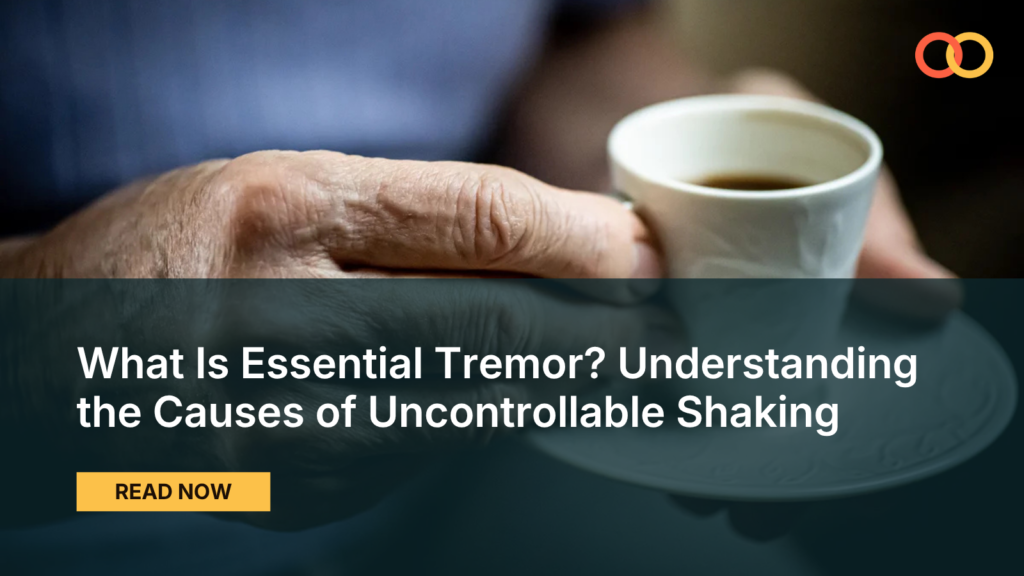
Based on conversations with hundreds of people living with hand tremors, many describe the first signs not as dramatic shaking but as small, accumulating frustrations — coffee spilled on the way to the table, a signature that looks nothing like it used to, avoiding meals with colleagues because holding a fork has become unreliable. These are not trivial complaints. For many people, they mark the beginning of a slow renegotiation of independence.
This article explains what essential tremor actually is, what current research suggests about its causes, how it differs from Parkinson’s disease, and what meaningful options exist today for people who want to reclaim steadier hands.
What Is Essential Tremor — and How Is It Different from Normal Shaking?
Essential tremor is a neurological movement disorder characterized by involuntary, rhythmic shaking that occurs specifically during intentional movement — reaching, holding, writing — rather than at rest. According to the National Institute of Neurological Disorders and Stroke (NINDS), essential tremor can be mild and stay mild, or slowly get worse over time.
The word “essential” has nothing to do with importance. In older medical terminology, it means the tremor exists on its own — not as a symptom of another disease. In its advanced stages, this condition can severely disrupt some of the most basic tasks and parts of life, such as eating, drinking and dressing yourself.
The distinction between ET and ordinary shaking matters clinically and practically. Everyone’s hands shake under extreme stress, after too much caffeine, or following intense physical exertion. Those tremors are transient and tied to a specific cause. Essential tremor is neither. It appears consistently during voluntary activity, tends to worsen gradually over years, and does not resolve when a trigger is removed — because there is no external trigger. The source is neurological.
What Does Essential Tremor Feel Like — and Which Body Parts Does It Affect?
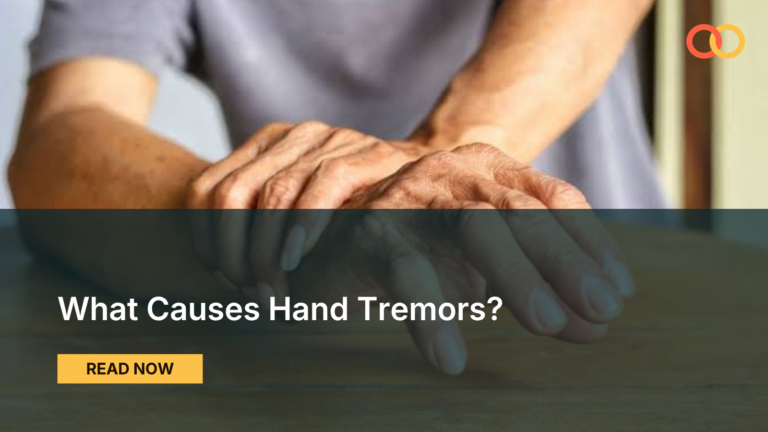
Essential tremor most commonly affects the hands and arms, though it can extend to the head, voice, and less commonly the trunk and legs. In movement disorder clinics, one of the first observations neurologists make is watching for tremor during specific tasks: holding the arms outstretched against gravity, pouring water between cups, touching a finger to the nose. The tremor that appears or worsens during these actions — and quiets when the limb is fully at rest — is the defining signature of ET.
Postural tremor happens when holding a position against gravity, such as holding the arms outstretched. Kinetic tremor is associated with any voluntary movement, such as moving the wrists up and down. Essential tremor encompasses both of these action tremor subtypes, which is why it interferes precisely with the activities that require controlled, purposeful hand movement — the same activities that define daily independence.
In practical terms, the progression typically follows a recognizable pattern. Early: the handwriting becomes slightly jagged; coffee occasionally spills. Middle: eating in public becomes stressful; signing documents requires more concentration than it should. Late: basic self-care tasks — buttoning, grooming, handling medication — require adaptive strategies or assistance. The rate of progression varies considerably between individuals, but the direction is consistent for most.
How Common Is Essential Tremor — and Who Is Most Likely to Develop It?
Experts estimate that essential tremor affects about 1% of all people worldwide, and about 5% of people over age 60. It is the most common form of tremor and one of the most common movement disorders. In the United States alone, estimates consistently point to 7–10 million people affected — a number that likely undercounts the true prevalence, since many people with mild tremor never seek a formal diagnosis
Age is the strongest risk factor. Although the tremor can start at any age, it most often first appears during adolescence or in middle age, between ages 40 and 50. The condition becomes increasingly common after 60, affecting a meaningful proportion of older adults in ways that are often attributed to “normal aging” rather than a diagnosable and manageable neurological condition.
Family history is the second major risk factor — and for many people, the most personally significant one.
What Causes Essential Tremor — Why Do Some People Develop Uncontrollable Shaking?
Research suggests essential tremor involves abnormal activity in the brain circuits responsible for coordinating movement — particularly the cerebellum and its connections to the thalamus. According to NINDS, studies show essential tremor is accompanied by a mild degeneration of the cerebellum, which is the part of your brain that controls movement coordination. Current evidence points to this disrupted circuit generating rhythmic, oscillatory signals that drive the repetitive muscle contractions experienced as tremor.
That said, the precise mechanism remains an active area of research. Evidence indicates this is a complex condition — not a single-cause disorder — in which genetic predisposition, environmental factors, and neurological changes interact over time. Neurologists typically emphasize this uncertainty not to minimize the condition, but because it explains why treatment responses vary so significantly between patients.
Is Essential Tremor Genetic — Can It Run in the Family?
Yes. In most people, the condition seems to be passed down from a parent to a child. If your parent has ET, there is a 50% chance you or your children will inherit the gene responsible for the condition.
When ET runs clearly through a family across generations, it is called familial tremor. When it appears without known family history, it is termed sporadic essential tremor. According to Penn Medicine, around half of all people with essential tremor inherit the condition from one of their parents. The exact genetic change that causes inherited essential tremor has not yet been identified, so there is currently no genetic testing for this condition.
According to NIH genetic research, in more than half of cases, essential tremor is inherited as an autosomal dominant trait, which means that children of an affected individual will have a 50% chance of also developing the disorder. Two genes for essential tremor have been found on two different chromosomes, demonstrating that mutations in a variety of genes may lead to essential tremor. (Source: PubMed)
For anyone whose parent had noticeable hand tremors — particularly tremors that worsened during activity like eating or writing — this family history is worth discussing with a neurologist at the first sign of symptoms. Earlier awareness consistently leads to better management outcomes.
What Other Factors Can Trigger or Worsen Essential Tremor Symptoms?
Beyond genetics and brain circuitry, a group of everyday factors can significantly amplify how noticeable ET symptoms become. These do not cause essential tremor, but they act on the underlying neurological instability in ways that are reliably measurable.
Common triggers include stress or strong emotion, being physically tired, or being in certain postures or making specific movements. Additional factors consistently reported in clinical literature include:
Caffeine is the most actionable dietary trigger. NINDS notes that excessive caffeine may cause temporary tremor or make an existing tremor worse. Many patients report a noticeable reduction in tremor amplitude within days of significantly reducing caffeine intake — not because caffeine is the cause, but because it amplifies the neurological signal already present.
Certain medications can worsen or even produce tremor in people without ET: lithium, valproate, some antidepressants, stimulants, and certain bronchodilators are among the most commonly implicated. According to Johns Hopkins Medicine, certain medicines, caffeine or stress can make your tremors worse. If tremor onset or worsening coincided with starting a new medication, this warrants a direct conversation with the prescribing physician.
Alcohol occupies an interesting clinical footnote: tremors may improve with ingestion of a small amount of alcohol such as wine. This alcohol-responsiveness is recognized as a characteristic feature of essential tremor specifically — not a recommendation, but a diagnostic observation that neurologists use to help distinguish ET from other tremor types.
Is Essential Tremor the Same as Parkinson’s Disease — What Is the Key Difference?
No. Essential tremor and Parkinson’s disease are two distinct neurological conditions. They are frequently confused — including, sometimes, by non-specialist physicians — but they differ in mechanism, tremor pattern, associated symptoms, and prognosis.
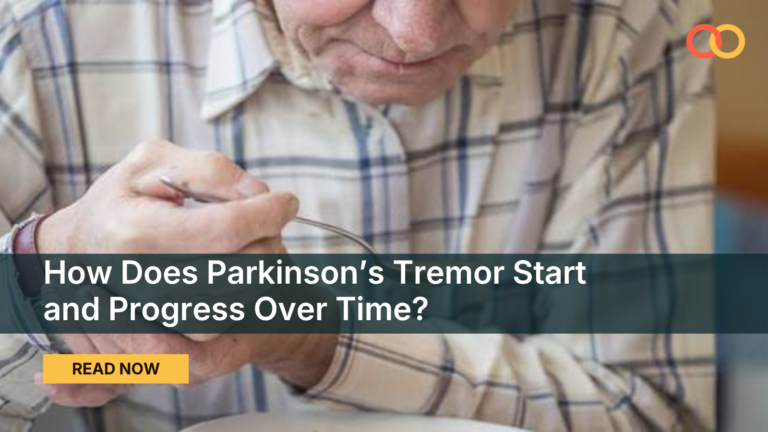
Neurologists typically distinguish them through a straightforward clinical observation: when does the tremor occur? According to NINDS, rest tremor happens when people are at rest. People with Parkinson’s disease often experience rest tremor. Action tremor happens when a muscle is moved voluntarily. Essential tremor is an action tremor. Parkinson’s tremor is primarily a resting tremor.
In practical terms: if your hand shakes most noticeably while holding a cup, reaching for something, or trying to write — and quiets when your hand rests completely in your lap — that pattern is characteristic of essential tremor. If the shaking is most visible when the hand is still and tends to diminish with intentional movement, that pattern is more consistent with Parkinson’s.
The table below summarizes the clinically significant differences neurologists assess during a differential diagnosis evaluation.
| Essential Tremor | Parkinson’s Disease | |
|---|---|---|
| When tremor occurs | During movement or held posture | At rest, when relaxed |
| Tremor pattern | Bilateral — both sides typically affected | Often starts one side, spreads later |
| Classic hand motion | Rhythmic back-and-forth | “Pill-rolling” thumb-finger motion |
| Additional symptoms | Tremor is primary symptom | Also causes rigidity, slowed movement, balance problems |
| Head/voice involvement | Common | Rare |
| Family history | Present in ~50–70% of cases | Usually not familial |
| US prevalence | ~7–10 million | ~1 million |
It is worth noting that both conditions can, in some patients, present with overlapping features — and some individuals have been found to have both. This is precisely why a thorough evaluation by a movement disorders neurologist, rather than a general practitioner, matters when tremor first appears or worsens meaningfully. The right diagnosis determines the right treatment path.
What Can You Do About Essential Tremor — Starting Points in 2026
Essential tremor has no cure, but it has a growing range of management options — and the right starting point depends on where you are in the progression of your symptoms.
For mild tremor, lifestyle modifications are the natural first step: reducing caffeine, managing sleep and stress, reviewing medications with your physician, and adopting weighted utensils or other adaptive tools for daily tasks. NINDS recommends eliminating or reducing caffeine and using assistive tools such as special plates, spoons, or heavier utensils to lessen tremor and make it easier to eat.
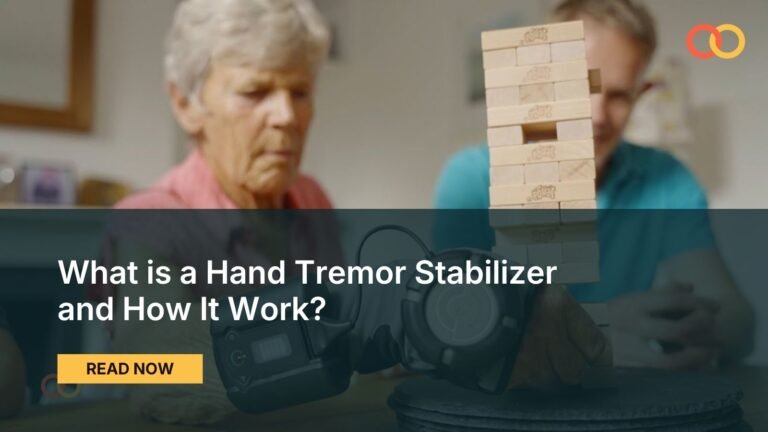
For moderate-to-severe tremor where daily activities are meaningfully affected, medication (propranolol or primidone as first-line options) and wearable assistive devices become relevant. Among newer non-invasive options, wearable tremor stabilizers have attracted increasing clinical attention because they can reduce functional impairment without systemic medication side effects. One example is GyroGlove by Gyrogear, which uses active gyroscopic stabilization to counteract hand tremors in real time — addressing the mechanical expression of tremor directly, rather than through the nervous system.
For a detailed explanation of how gyroscopic stabilization technology works in GyroGlove, see: → How Gyroscopic Stabilization Cancels Shaky Hands: The Science Behind GyroGlove’s Active Tremor Control