


This matters because Parkinson’s is not defined by shaking alone. Bradykinesia, or slowness of movement, is a core feature, and Parkinson’s can be considered when bradykinesia occurs with rigidity even if resting tremor is absent.
When shaking is not present, the more useful question is whether everyday movements have become consistently slower, smaller or stiffer than before.
Can You Have Parkinson’s Without Tremor?
Parkinson’s can present without obvious shaking, with slowness, stiffness or reduced automatic movement becoming more noticeable instead.
Someone may notice that one arm no longer swings normally while walking, one hand has become slower during repeated movements, or everyday actions take more effort even though the hand never visibly shakes.
Tremor is not required for Parkinson’s to be considered clinically. The absence of shaking does not by itself rule out the condition. Current diagnostic framing places bradykinesia at the center: bradykinesia must be present together with either resting tremor or rigidity. This means a person with bradykinesia and rigidity can fit a Parkinsonian motor pattern without tremor.
Read more: Parkinson Disease Symptoms in Early Stages: First Signs You Should Not Ignore
What Symptoms Can Parkinson’s Cause Without Tremor?
When tremor is absent, bradykinesia and rigidity become particularly important movement signs to recognize. Instead of obvious shaking, changes may appear in walking, handwriting, hand use or other movements that previously felt automatic.
These changes can be easy to overlook because they may initially be attributed to aging, fatigue or musculoskeletal problems.
Is Slowness of Movement a Key Sign When Tremor Is Absent?
Yes. Bradykinesia is one of the core motor features of Parkinson’s disease and may be more noticeable than tremor in some people.
Bradykinesia involves more than simply moving slowly. Movements can also become smaller, less fluid or progressively reduced during repeated actions.
In everyday life, this may appear as:
- taking longer to button clothing, brush teeth or prepare food;
- walking with shorter or slower steps;
- handwriting becoming smaller;
- difficulty starting a movement;
- repeated movements becoming slower or less complete.
One of the more subtle signs is that tasks that previously happened almost automatically begin to require more time, attention or effort. Slower or smaller movements can make writing, fastening buttons or handling small objects noticeably more difficult.
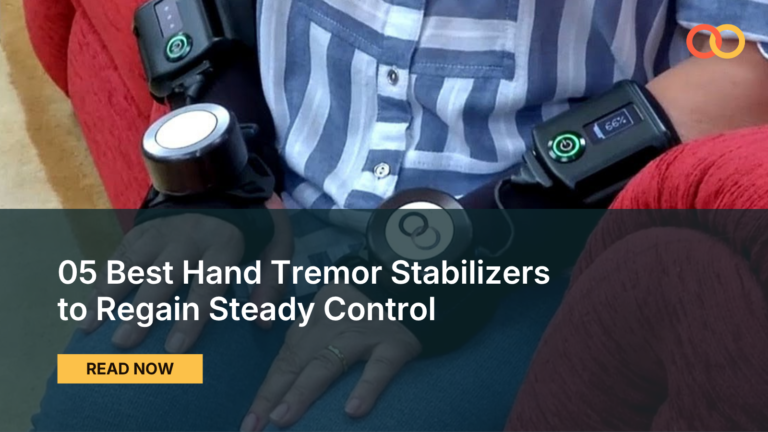
From GyroGear’s perspective on hand tremor and functional hand use, visible shaking is only one part of how movement changes can affect daily tasks. The practical impact depends on how well the hand can perform the task being asked of it.
Read more: Understand & Manage Dyskinesia in Parkinson’s Disease: Causes, Symptoms, and Treatment Options
Can Stiffness Be More Noticeable Than Shaking?
Yes. When tremor is minimal or absent, rigidity may be one of the more noticeable Parkinson’s movement symptoms.
Rigidity refers to increased stiffness or resistance during movement. It can affect the arms, legs or trunk and may make one side of the body feel tight, heavy or less free-moving.
One common change is reduced arm swing while walking, particularly when one arm moves less naturally than the other. Stiffness can also reduce range of motion and make activities such as dressing, reaching or turning the body feel more restricted.
Bradykinesia and rigidity often appear together functionally. A person may walk with shorter steps while one arm swings less.
Stiffness alone is not specific to Parkinson’s. Arthritis, injuries and other neurological or musculoskeletal conditions can cause similar complaints. Persistent stiffness becomes more clinically meaningful when it occurs alongside characteristic slowness or other changes in movement.
What Does “Non-Tremor-Dominant Parkinson’s” Actually Mean?
Non-tremor-dominant Parkinson’s means that tremor is not the predominant motor feature. It does not mean that tremor can never occur. Parkinson’s without tremor and non-tremor-dominant Parkinson’s are related, but they are not the same thing.
Read more: How Does Parkinson’s Tremor Start and Progress Over Time?
Researchers commonly distinguish tremor-dominant presentations from patterns in which bradykinesia, rigidity, gait difficulty or postural problems are more prominent. Someone in a non-tremor-dominant group may still have some tremor, but shaking contributes less to the overall motor picture.
These motor phenotypes are also not always fixed. A person’s symptom profile can change over time, meaning tremor may become more or less prominent relative to other movement problems.
For patients and caregivers, persistent movement changes still deserve attention even when shaking is absent. The absence of tremor does not rule out Parkinson’s disease, and patterns of slowness, stiffness and reduced automatic movement are more informative than waiting for tremor to appear.