


What matters more is the movement pattern. Parkinsonian tremor is commonly most noticeable at rest, often begins asymmetrically and becomes more meaningful when it appears alongside bradykinesia, rigidity or other movement changes.
For GyroGear, visible shaking alone is not enough to interpret a tremor. When it occurs, which hand is affected, how it changes with movement and whether other motor symptoms are present provide more useful clinical context.
Is a Hand Tremor Always Parkinson’s Disease?
No. Hand tremor is a symptom, while Parkinson’s disease is a clinical diagnosis based on a broader pattern of movement changes.
A person can have hand tremor without Parkinson’s, and some people with Parkinson’s do not develop a prominent tremor.
Three observations are especially useful:
- Does the tremor occur mainly at rest or during movement?
- Does it affect one hand more than the other?
- Are slowness, stiffness or gait changes also present?
These features do not provide a diagnosis, but they help distinguish a general complaint of “shaky hands” from a more specific tremor pattern.
Read more: Why Does My Hand Shake When Holding Something?
What Hand Tremor Pattern Is More Typical of Parkinson’s Disease?
Parkinsonian hand tremor is commonly a resting tremor that begins asymmetrically and often becomes less noticeable when the affected hand is actively used.
A pill-rolling thumb-and-finger movement may also occur. No single tremor feature confirms Parkinson’s disease.
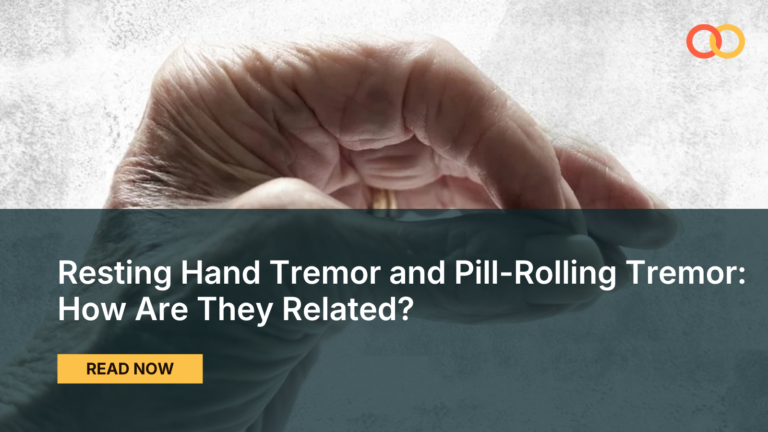
Read more: Resting Hand Tremor and Pill-Rolling Tremor: How Are They Related?
Is Parkinsonian Hand Tremor Usually a Resting Tremor?
Often, yes. Parkinsonian tremor is classically most noticeable when the hand is relaxed rather than actively performing a task.
For example, the hand may shake while resting in the lap or hanging beside the body and become less noticeable when the person reaches for an object.
People with Parkinson’s can also have postural or action tremor, so resting tremor should be treated as a clinical clue rather than a standalone diagnostic sign.
Does Parkinsonian Tremor Usually Start in One Hand?
It often begins asymmetrically, with one hand or one side of the body affected more than the other.
This asymmetry is particularly characteristic early in Parkinson’s disease. Symptoms may later involve both sides, but one side can remain more prominent.
A one-sided hand tremor alone is still not specific enough to diagnose Parkinson’s.
Read more: Why Does Only One Hand Shake? Unilateral Hand Tremor Explained
Is Pill-Rolling Tremor Specific to Parkinson’s Disease?
No. Pill-rolling tremor is strongly associated with Parkinsonian tremor, but it does not confirm Parkinson’s disease by itself.
The movement typically involves rhythmic motion of the thumb against the fingers, resembling the action of rolling a small object between them. Pill-rolling describes what the tremor looks like, not the diagnosis behind it.
Tremor becomes more consistent with a Parkinsonian pattern when rest tremor or asymmetry occurs alongside other motor features such as:
- Bradykinesia: slowness or reduced amplitude of movement
- Rigidity: abnormal muscle stiffness
- Reduced arm swing: often more noticeable on one side
- Gait changes: changes in walking, turning or balance
The combination matters more than any single sign.
How Is Parkinsonian Tremor Different From Essential Tremor?
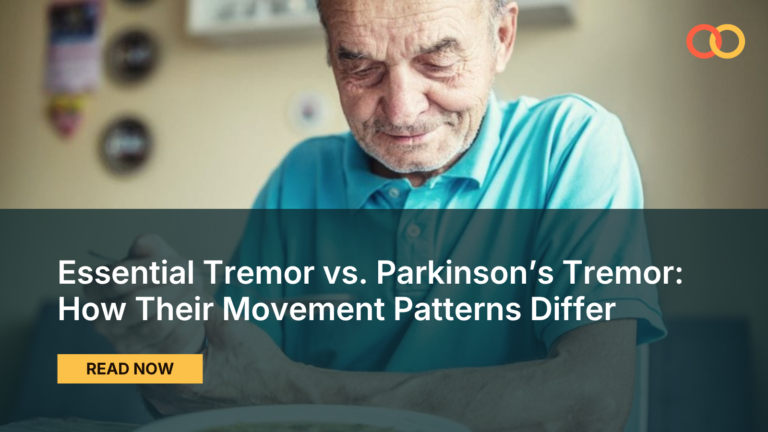
Parkinsonian tremor is usually more prominent at rest and often asymmetric, while essential tremor is typically more noticeable during posture or purposeful movement and commonly affects both upper limbs.
The practical differences are:
| Feature | Parkinsonian tremor | Essential tremor |
|---|---|---|
| Typical timing | Often prominent at rest | Usually during posture or action |
| Early distribution | Often asymmetric | Commonly affects both upper limbs |
| Writing or drinking | May be affected | Commonly reveals tremor |
| Bradykinesia or rigidity | May be present | Not defining features |
| Diagnosis from tremor alone | No | No |
These are typical patterns rather than absolute rules.
Essential tremor can occasionally include a resting component, particularly in long-standing disease, while people with Parkinson’s can also experience action tremor. This overlap is why diagnosis cannot rely on rest versus action alone.
Shaking during writing, drinking or holding objects is therefore not specific to Parkinson’s and may reflect a broader action tremor pattern.
What Else Can Cause Hand Tremor Besides Parkinson’s Disease?
Hand tremor can also occur with essential tremor, enhanced physiologic tremor, medication effects and other neurological or systemic conditions.
Common clinical contexts include:
- Essential tremor: usually more noticeable during posture or voluntary movement
- Enhanced physiologic tremor: normal physiologic shaking made more visible by stress, fatigue, caffeine or other stimulants
- Medication-related tremor: shaking that appears or worsens after certain medicines or dose changes
- Other neurological or systemic conditions: causes that require broader medical assessment
The fact that a tremor does not look Parkinsonian does not make it unimportant. It means the movement needs to be interpreted in the correct clinical context.
For a broader review of possible causes, see What Causes Hand Tremors? Medical Conditions, Medications & Lifestyle Triggers Explained.
When Should a Hand Tremor Be Medically Assessed?
A new, persistent, worsening or unexplained hand tremor should be medically assessed, particularly when it occurs at rest, begins mainly on one side or appears with slowness or stiffness.
Useful details to report include:
- Whether the tremor occurs at rest or during movement
- Whether one or both hands are affected
- Whether voluntary movement reduces or provokes the tremor
- Whether writing, drinking or holding objects also trigger shaking
- Whether the tremor is stable or progressing
- Whether stiffness, slowness, reduced arm swing or gait changes are present
A clinician may compare the hand at rest, during posture and during purposeful tasks to determine whether the movement is predominantly resting, action-related or mixed.
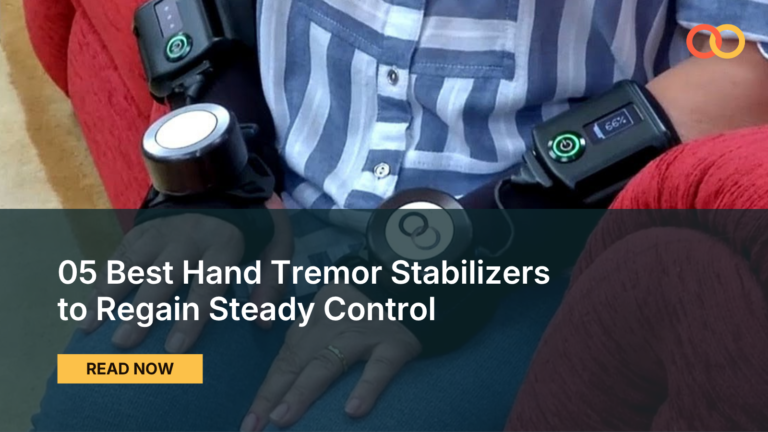
For people whose tremor also affects eating, writing, drinking or holding objects, functional support may become relevant after the movement pattern has been appropriately assessed. For suitable users, GyroGlove is a non-invasive wearable designed to support hand stability during selected everyday activities.
Read more: What is a Hand Tremor Stabilizer and How It Work?
Can You Have Parkinson’s Without a Hand Tremor?
Yes. Parkinson’s disease can occur without a prominent hand tremor.
This is an important counterpoint to the assumption that shaking defines Parkinson’s. The diagnosis depends on the broader motor pattern, particularly bradykinesia together with other features such as rigidity or rest tremor.
Should You Self-Diagnose Parkinson’s From a Tremor Pattern?
No. A tremor pattern can provide useful clinical clues, but it cannot confirm Parkinson’s disease without medical history and neurological examination.
A hand tremor is therefore not automatically Parkinson’s disease. Resting tremor, asymmetry and accompanying bradykinesia or rigidity make a Parkinsonian pattern more relevant, while action-dominant tremor may point toward other clinical contexts. The complete movement pattern matters more than shaking alone.
This article is for educational purposes only and does not replace professional medical advice, diagnosis or treatment.