

The most useful distinctions are when the tremor started, whether it occurs at rest or during movement, how it changes over time, and how much it affects daily activities. Essential tremor can begin early in life but becomes more common with age, while Parkinsonian tremor becomes more relevant in later adulthood.
For GyroGear, this functional context matters as much as the visible shaking. Two people with similar tremor severity may experience very different difficulties with writing, eating, drinking or other hand-controlled tasks.
Can Hand Tremor Occur at Any Age?
Yes. Hand tremor can occur at any age because physiologic tremor, essential tremor, medication effects and neurological or systemic conditions are not restricted to a single life stage.
MedlinePlus notes that tremor can occur at any age, although it is more common in middle-aged and older adults. Essential tremor can also appear at any age and becomes more common later in life.
This is why age should be treated as clinical context rather than a diagnostic shortcut. A useful assessment considers:
- Age of onset
- Rest vs action pattern
- Progression
- Associated symptoms / medication context
The key question is therefore not simply, “How old is the person?” It is, “When did the tremor begin, and what pattern has it followed since then?”
How Does Hand Tremor Differ Across Life Stages?
Hand tremor differs across childhood, young adulthood, middle adulthood and older adulthood mainly in its clinical context and in which explanations become more relevant.
These age groups are clinical contexts, not diagnostic categories. Many tremor disorders overlap across ages.
What Is Different About Hand Tremor in Children?
Hand tremor in children requires a pediatric perspective because the range of possible tremor syndromes and the way they are assessed differ from adults.
A 2025 review of pediatric tremor found that childhood presentations can include enhanced physiologic tremor, essential tremor, medication-related tremor, metabolic conditions and less common genetic or structural disorders. The review also noted that pediatric tremor remains less extensively studied than adult tremor.
Essential tremor is particularly important because it is sometimes assumed to be an older-adult disorder. It can begin in childhood. In one retrospective series of 211 children with essential tremor, the mean reported age of onset was 9.7 years, and 55% had functional impairment.
In practice, useful questions include whether shaking appears while the child is:
- Writing or drawing
- Eating with utensils
- Holding the arms out
- Performing fine motor tasks
Persistent tremor should not automatically be attributed to nervousness. Its pattern, progression, family history and any accompanying symptoms provide more useful information.
What Is Different About Hand Tremor in Teenagers and Young Adults?
In teenagers and young adults, physiologic tremor may become more noticeable with stress, fatigue, lack of sleep or stimulants, while essential tremor can also begin during this period.
Everyone has a small physiologic tremor. Factors such as fatigue, stress and caffeine can make it more visible.
In younger people, the key distinction is between situational shaking and persistent tremor. Occasional shaking after heavy caffeine intake or physical exhaustion is different from a recurrent tremor that appears during everyday tasks regardless of those triggers.
Young age also does not rule out essential tremor. Essential tremor can begin at any age, even though it is more common later in adulthood.
The first practical signs may appear during:
- Handwriting
- Typing or phone use
- Eating and drinking
- Grooming
- Fine motor work
The distinction GyroGear considers especially useful is whether the shaking is temporary and situation-dependent or persistent enough to interfere with function.
What Is Different About Hand Tremor in Middle-Aged Adults?
In middle adulthood, essential tremor becomes increasingly relevant, while onset, movement pattern and progression remain important for understanding a new or changing tremor.
Mayo Clinic states that essential tremor can occur at any age but is most common in people aged 40 and older. Its hand tremor is usually more noticeable when using the hands rather than when they are fully at rest.
The more useful distinction at this stage is between:
Long-standing tremor: shaking that began earlier in life and has persisted or gradually changed.
New-onset tremor: shaking that appears for the first time in middle adulthood.
These histories should not be interpreted in the same way. A clinician will also consider whether the tremor is predominantly present during action, posture or rest, whether it is progressing and whether medications or other symptoms have changed.
For people living with tremor, functional impact may also become more obvious at this stage. Writing, computer work, cooking, drinking from a cup or performing precise occupational tasks can reveal limitations that are not obvious when the hands are simply observed at rest.
What Is Different About Hand Tremor in Older Adults?
Hand tremor is more common in older adults, and essential tremor and Parkinsonian tremor become more relevant considerations, but shaking is not automatically a sign of Parkinson’s disease or normal aging.
Essential tremor and Parkinsonian tremor often differ in how they present.
Mayo Clinic notes that essential tremor of the hands is usually most apparent while the hands are being used, whereas Parkinsonian tremor is often more noticeable when the hands are resting. Parkinson’s disease is also evaluated alongside other movement features rather than tremor alone.
Medication effects and other neurological or systemic conditions also remain relevant in older adults. A medication history is therefore part of the wider assessment, especially when shaking appears after a treatment is started or changed.
Older age increases the relevance of some tremor conditions, but it does not determine which condition a person has.
Why Does the Age When a Hand Tremor Starts Matter?
Age of onset matters because it separates long-standing tremor from a newly developed change, even when two people are currently the same age.
Consider two people who are both 70 years old:
- One has experienced hand tremor since age 25.
- The other developed hand tremor six months ago.
Their current age is identical, but their histories are very different. The first has a decades-long tremor course. The second has a new neurological or systemic symptom that needs to be interpreted in the context of recent health, medication and functional changes.
Age of onset becomes more informative when combined with:
- Tremor pattern
- Speed of progression
- Family history
- Medication history
- Known triggers
- Other neurological symptoms
This is why experienced tremor assessment focuses on history and pattern, not age in isolation.
Read more: What Causes Hand Tremors? Medical Conditions, Medications & Lifestyle Triggers Explained
Does a Long-Standing Tremor Mean the Same Thing as a New Tremor Later in Life?
No. A long-standing tremor and a newly developed tremor represent different clinical histories and should not be interpreted as equivalent simply because the movements look similar.
Duration and progression help establish whether the tremor has been stable for years or represents a recent change that warrants further investigation.
Can the Same Type of Tremor Occur at Different Ages?
Yes. The same tremor disorder can occur at different ages because conditions such as essential tremor are not limited to one life stage.
Essential tremor can occur in children, younger adults and older adults, although its prevalence increases with age. Enhanced physiologic tremor can likewise become visible at different ages when factors such as fatigue, stress or caffeine amplify normal physiologic shaking.
Age therefore changes probability and context, not the fundamental definition of the tremor.
Does the Daily Impact of Hand Tremor Change With Age?
Yes. Hand tremor can interfere with different activities at different life stages because the demands placed on hand control change between school, work, self-care and independent living.
A child may first notice difficulty with handwriting. A working adult may struggle with typing, tools or precise manual tasks. An older adult may be more concerned about eating, drinking or maintaining independence.
The table below shows how the functional impact may differ by life stage. These activities are examples rather than age-specific rules.
| Life stage | Hand-controlled activities that may be affected |
|---|---|
| Childhood | Writing, drawing, eating, classroom tasks |
| Teenagers and young adults | Writing, phone use, typing, eating, grooming |
| Middle adulthood | Work tasks, cooking, drinking, writing, using tools |
| Older adulthood | Eating, drinking, dressing, grooming, holding everyday objects |
This distinction matters because visible tremor severity and functional disability are not the same thing. A relatively modest action tremor may seriously interfere with a person’s occupation or handwriting, while a more visible tremor may have less impact on another person’s routine.
Mayo Clinic identifies writing, holding a glass and eating as activities that can become difficult when essential tremor is more severe. Occupational therapy and adaptive devices may also be used to reduce the effect of tremor on daily activities.
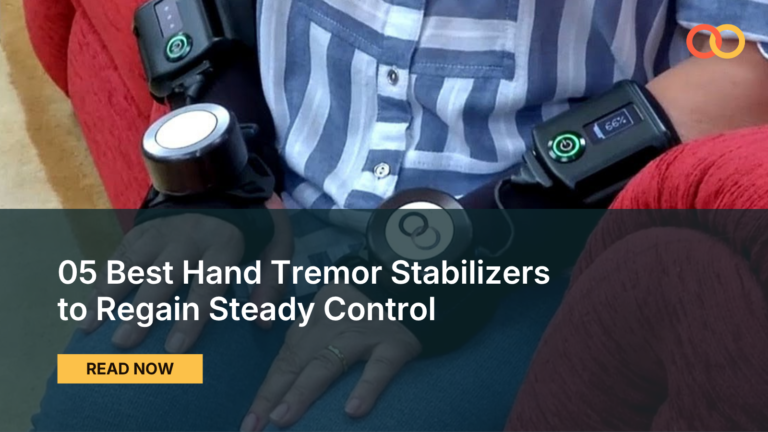
GyroGear approaches hand tremor from this functional perspective. For appropriate users, GyroGlove is a non-invasive wearable designed to support hand stability during everyday activities. It does not diagnose or treat the underlying cause of tremor, so identifying the clinical context remains separate from choosing practical support.
Read more: GyroGlove™ vs Medication and Surgery for Hand Tremors: What’s the Difference?
When Should Hand Tremor at Any Age Be Medically Assessed?
Hand tremor should be medically assessed when it is persistent, unexplained, worsening, newly developed or interfering with everyday activities, especially when other symptoms occur alongside it.
MedlinePlus advises that tremor that does not go away over time may indicate a medical problem and should be evaluated by a healthcare professional.
Assessment is particularly appropriate when:
- Tremor begins suddenly
- Shaking progressively worsens
- It starts interfering with eating, writing, dressing or work
- Other neurological symptoms appear
- Tremor begins after a medication is introduced or changed
A clinical assessment may consider medical and family history, neurological findings and the tremor during tasks such as holding the arms out, writing or drawing a spiral.
Age helps interpret those findings, but it should never be used alone to identify the cause.
Is Hand Tremor Simply a Normal Part of Getting Older?
No. Tremor becomes more common with age, but new or persistent shaking should not automatically be considered normal aging. Several neurological, medication-related and systemic causes may need to be considered.
Does Hand Tremor in an Older Adult Mean Parkinson’s Disease?
No. Hand tremor in an older adult does not automatically indicate Parkinson’s disease. Tremor pattern, other movement symptoms and the person’s clinical history are considered together during assessment.
Understanding Hand Tremor Across Different Ages
Hand tremor can occur at any age, but age alone does not explain what it means. Age of onset, tremor pattern, progression and functional impact provide more useful context. New, persistent or worsening tremor should be assessed by a healthcare professional.
For GyroGear, the practical impact is equally important. Understanding which everyday activities are affected helps separate the clinical question of why tremor is occurring from the functional question of how a person can maintain independence and perform daily tasks more confidently.
This article is for educational purposes only and does not replace professional medical advice, diagnosis or treatment.