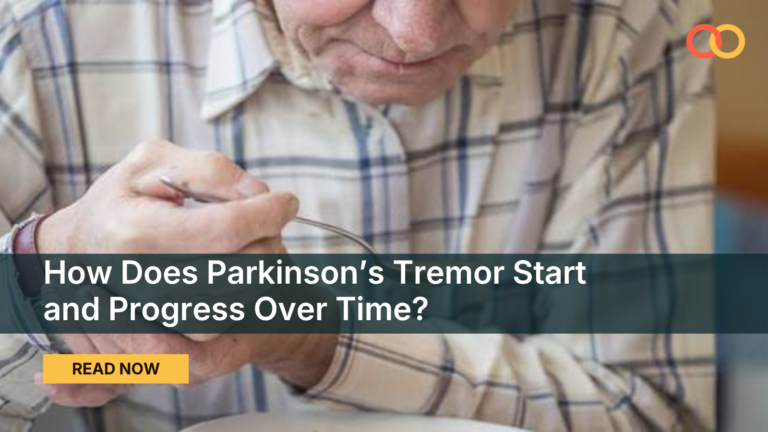



The key distinction is simple: resting tremor describes when the movement occurs, while pill-rolling describes what the movement looks like. Neither pattern alone diagnoses Parkinson’s disease. Clinicians also consider asymmetry, response to voluntary movement, progression and other motor features.
For GyroGear, this distinction matters because the appearance of shaking alone does not explain the underlying condition or its effect on everyday hand use.
How Are Resting Hand Tremor and Pill-Rolling Tremor Related?
A pill-rolling tremor is a specific movement pattern that commonly appears as a resting tremor, but not every resting tremor has a pill-rolling appearance.
The relationship becomes clearer by separating timing from movement pattern:
- Resting hand tremor: describes when shaking occurs, usually when the hand is relaxed and supported.
- Pill-rolling tremor: describes how the movement looks, typically involving rhythmic movement of the thumb against the fingers.
Cleveland Clinic describes pill-rolling tremor as typically occurring at rest and often becoming less noticeable with voluntary movement. The Parkinson’s Foundation similarly describes pill-rolling as a common appearance of Parkinsonian resting tremor.
The terms therefore overlap, but they are not interchangeable.
What Is a Resting Hand Tremor?
A resting hand tremor is rhythmic shaking that is most noticeable when the hand is relaxed, supported and not performing a voluntary movement.
“Resting” does not mean sleeping. It means the affected hand is not actively maintaining a posture or performing a purposeful movement.
The tremor may be visible when the hand rests in the lap, lies loosely on a surface or hangs relaxed beside the body. It may become less noticeable when the person deliberately reaches for or grips an object.
This timing distinguishes resting tremor from action tremor:
- Resting tremor: appears predominantly when the affected body part is relaxed.
- Action tremor: appears during voluntary muscle activation, posture or movement.
The distinction is clinically useful, but it is not diagnostic. Some people can also have both resting and action components.
Read more: What Does a Hand Tremor Look Like? Types and Movement Patterns Explained
What Is a Pill-Rolling Tremor?
A pill-rolling tremor is a rhythmic thumb-and-finger movement that resembles rolling a small pill or object between the fingers.
The term describes the appearance of the movement, not a disease.
A typical pattern may involve:
- Repetitive movement of the thumb against the index or other fingers
- Rhythmic finger movement while the hand is relaxed
- Greater involvement of one hand, particularly early in the clinical course
- Reduction in shaking when voluntary movement begins
Cleveland Clinic notes that pill-rolling tremor often occurs at rest and is strongly associated with Parkinson’s disease. However, the pattern can occur outside Parkinson’s and should not be treated as diagnostic by itself.
How Is Pill-Rolling Tremor Different From Other Resting Tremors?
Pill-rolling tremor is distinguished by its characteristic thumb-and-finger movement, while other resting tremors can occur without this specific pattern.
Other resting movements may involve whole-hand shaking, wrist movement, finger shaking without thumb rubbing or rotation of the forearm.
| Feature | Resting hand tremor | Pill-rolling tremor |
|---|---|---|
| Main defining feature | Occurs predominantly at rest | Characteristic thumb-and-finger movement |
| What the term describes | Timing | Movement appearance |
| Pill-rolling movement required | No | Yes |
| Association with Parkinson’s | Can occur in Parkinsonian tremor | Classically associated with Parkinsonian tremor |
| Diagnostic by itself | No | No |
A pill-rolling tremor can therefore be a resting tremor, but a resting tremor does not need to look pill-rolling.
Does Every Resting Tremor Look Like Pill-Rolling?
No. A resting tremor can occur without the characteristic thumb-and-finger movement of a pill-rolling tremor.
It may appear as rhythmic shaking of the hand, wrist or fingers, or as forearm rotation. Even in Parkinson’s disease, not every person with tremor displays a clear pill-rolling pattern.
The absence of pill-rolling therefore does not rule out a resting or Parkinsonian tremor.
Can Pill-Rolling Tremor Occur During Movement?
The classic pill-rolling pattern is most strongly associated with rest, although tremor behaviour can change with posture and voluntary movement.
Parkinsonian resting tremor often becomes less noticeable when purposeful movement begins. In some people, tremor can reappear after the arms have been held in a posture for several seconds, a phenomenon known as re-emergent tremor.
Observing tremor at rest and during movement therefore provides more information than observing it in only one position.
Read more: Why Does My Hand Shake When Holding Something?
Does a Resting or Pill-Rolling Tremor Mean Parkinson’s Disease?
No. Neither a resting hand tremor nor a pill-rolling pattern alone confirms Parkinson’s disease.
These patterns become more consistent with a Parkinsonian presentation when the tremor is asymmetric, strongest at rest and accompanied by bradykinesia or rigidity. Even this combination requires clinical assessment rather than self-diagnosis.
Rest tremor can also occur in other clinical contexts. Essential tremor is primarily an action tremor, for example, but some people with long-standing essential tremor can develop a resting component.
Why Is Pill-Rolling Tremor Associated With Parkinson’s Disease?
Pill-rolling tremor is associated with Parkinson’s because Parkinsonian tremor commonly affects the hand at rest and may produce rhythmic thumb-and-finger movement.
The tremor also often begins asymmetrically. One hand may show the movement more prominently before symptoms affect both sides.
These features make the pattern recognisable, but none is sufficient in isolation.
What Other Signs Matter Besides Tremor?
Bradykinesia, rigidity and changes in gait or arm movement matter because Parkinson’s disease is assessed as a broader movement disorder, not as tremor alone.
Relevant motor features include:
- Bradykinesia: slowness or reduced amplitude of movement
- Rigidity: increased stiffness or resistance to movement
- Reduced arm swing: often more noticeable on one side
- Gait or balance changes: changes in walking, turning or postural control
A person can also have Parkinson’s disease without a prominent pill-rolling tremor. Tremor is therefore one part of the clinical picture rather than a standalone diagnostic sign.
What Details Help Describe a Resting Hand Tremor More Accurately?
The most useful details are when the tremor occurs, how it looks, whether one side is affected more than the other and how it changes with voluntary movement.
Useful observations include:
- Does it appear while the hand is relaxed?
- Does it decrease when movement begins?
- Is one hand affected more than the other?
- Does the thumb move rhythmically against the fingers?
- Does tremor also appear while maintaining a posture?
- Has it remained stable, or gradually become more noticeable?
These details describe the movement more accurately than simply saying the hand is “shaky.”
GyroGear takes the same functional approach to hand tremor: timing, movement pattern and the activities affected provide more useful information than visible shaking alone.
When Should a Resting Hand Tremor Be Medically Assessed?
A new, persistent or changing resting hand tremor should be medically assessed, particularly when it begins on one side or occurs alongside slowness, stiffness or changes in walking.
Assessment is also appropriate when tremor begins affecting everyday activities or changes from its previous pattern.
A clinician may compare the hand:
- At rest
- During voluntary movement
- While maintaining a posture
- During fine motor tasks
This helps determine whether the tremor is predominantly resting, action-related or a combination of both.
Is a New Pill-Rolling Tremor Something to Ignore?
No. A new, persistent pill-rolling movement should be medically assessed. Its association with Parkinsonian tremor makes the pattern clinically relevant, although it cannot determine the diagnosis by itself.
Can Resting Tremor Affect Daily Activities Even If It Appears Mainly at Rest?
Yes, although a pure resting tremor may decrease during purposeful movement, the underlying condition or an accompanying action tremor can still affect everyday hand use.
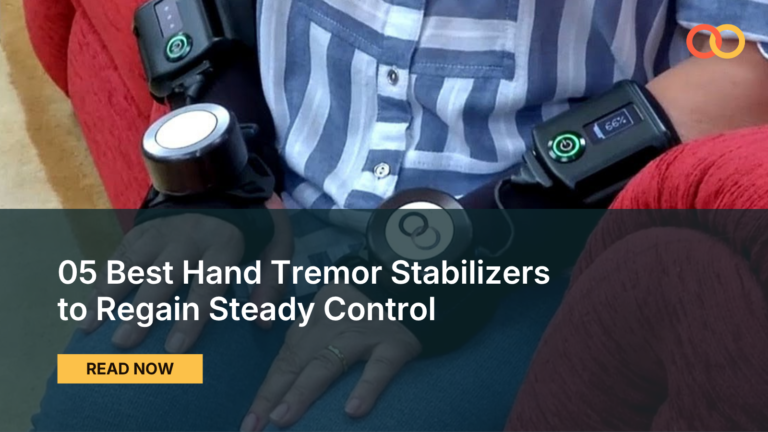
Because resting tremor occurs when the hand is not actively performing a task, functional support should be considered according to what happens when the person actually uses the hand. For appropriate users whose tremor also affects daily activities, GyroGlove is a non-invasive wearable designed to support hand stability during selected tasks.
Read more: Life with Unsteady Hands vs. Life with a Gyroscopic Stabilizer — What Really Changes?
A resting hand tremor and a pill-rolling tremor are related but not identical. Resting tremor describes when the shaking occurs; pill-rolling describes what the movement looks like. Both can occur in Parkinsonian tremor, but neither pattern alone determines the diagnosis.
This article is for educational purposes only and does not replace professional medical advice, diagnosis or treatment.