


For mild tremor, reducing caffeine, getting enough sleep and managing stress may help when these factors make shaking worse. Persistent or function-limiting tremor may require medication, therapy or, in selected severe cases, procedural treatment.
For GyroGear, effective tremor management is not only about reducing visible shaking. It also means improving the specific activities that tremor makes difficult, such as eating, writing, drinking or handling everyday objects.
What Can You Do to Reduce Hand Tremors Right Now?
Reducing caffeine, improving sleep, limiting fatigue and managing stress can help when these factors are amplifying physiologic tremor or making an existing tremor more noticeable.
These measures are most useful when shaking varies with daily circumstances. They should not replace assessment when tremor is persistent, progressive or unexplained.
Can Reducing Caffeine Help Hand Tremors?
Yes, reducing caffeine can help when caffeine is triggering or worsening the shaking.
Caffeine and other stimulants can increase physiologic tremor or make an existing tremor more noticeable. If shaking consistently becomes stronger after coffee, energy drinks or other caffeinated products, reducing intake may help identify whether caffeine is contributing.
Can Better Sleep and Less Fatigue Reduce Shaking?
Yes. Fatigue and inadequate sleep can make hand tremor more noticeable, so adequate rest may reduce this amplification.
This does not mean sleep treats an underlying movement disorder. It means reducing fatigue may prevent an existing tremor from becoming unnecessarily stronger.
Can Stress Reduction Help?
Yes, when stress or anxiety aggravates the tremor. Stress management may reduce symptom amplification, but it does not treat the underlying neurological cause.
Relaxation techniques, paced breathing or other stress-reduction strategies may help when shaking becomes more noticeable during periods of tension.
Persistent tremor should not automatically be attributed to anxiety simply because stress makes it worse.
If tremor began after starting a medicine, increasing a dose or combining medications, discuss the timing with the prescribing clinician. Do not stop a prescribed medicine on your own. Medication-related tremor may require dose adjustment, substitution or another clinical decision rather than abrupt withdrawal.
Read more: Life with Unsteady Hands vs. Life with a Gyroscopic Stabilizer — What Really Changes?
What Medical Treatments Can Reduce Hand Tremors?
Medical treatment is generally considered when tremor is persistent, functionally limiting or caused by a condition that requires treatment. The appropriate option depends on the diagnosis and severity.
There is no single medicine or procedure that should be used for every hand tremor.
Can Medicines Reduce Hand Tremor?
Yes. Medicines can reduce some types of hand tremor, but the choice depends on the diagnosis, medical history and potential side effects.
For essential tremor, commonly used options include medicines such as propranolol and primidone. Other medications may be considered depending on the individual’s response and clinical context.
Medication should follow assessment rather than trial-and-error treatment based only on shaking, because essential, Parkinsonian, medication-induced and secondary tremors require different approaches.
Read more: GyroGlove™ vs Medication and Surgery for Hand Tremors: What’s the Difference?
Can Occupational or Physical Therapy Help?
Yes. Occupational and physical therapy can reduce the functional impact of tremor even when the shaking itself does not completely disappear.
Occupational therapy can help adapt tasks, grips, positioning and equipment. Physical therapy may also be relevant when broader movement, balance or coordination problems are present.
The goal is not always to eliminate every visible movement. Improving control and reducing difficulty during daily activities can still represent a meaningful outcome.
Are Botox, DBS or Focused Ultrasound Used for Tremor?
Yes, but these treatments are used selectively according to tremor type, severity and response to less invasive options.
Botulinum toxin injections may help certain tremors, although hand or finger weakness can occur and treatment therefore requires careful clinical selection.
For severe, disabling tremor that does not respond adequately to medication, specialist options may include:
- Deep brain stimulation (DBS): implanted electrodes deliver electrical stimulation to targeted brain circuits involved in tremor.
- Focused ultrasound: targeted ultrasound energy is used to treat a specific brain region involved in tremor.
These are specialist treatments for selected patients, not general solutions for occasional shaky hands.
How Can You Manage Hand Tremor During Daily Activities?
Hand tremor can often be made easier to live with by reducing the precision, grip force or stability required during difficult tasks, even when some shaking remains.
Practical adaptations may include:
- Using utensils with larger or easier-to-grip handles
- Supporting the forearm during writing or other precision tasks
- Using cups with lids, handles or other features that improve control
- Choosing clothing that is easier to fasten
- Using typing or voice input when handwriting becomes difficult
- Working with an occupational therapist to adapt specific tasks
This distinction is central to GyroGear‘s approach: reducing tremor and improving function are related, but they are not identical goals.
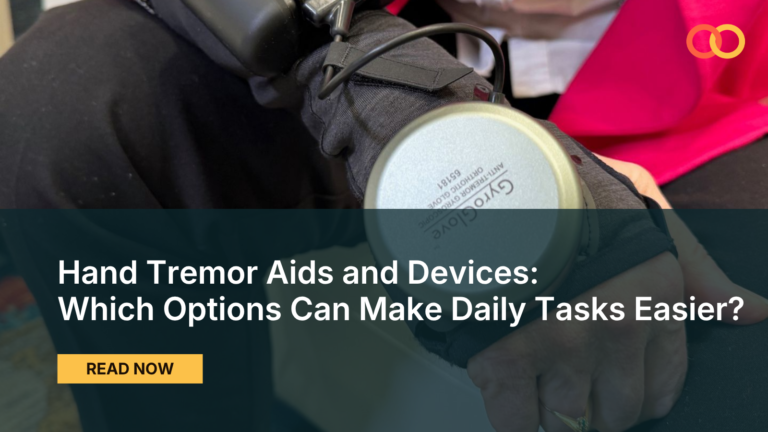
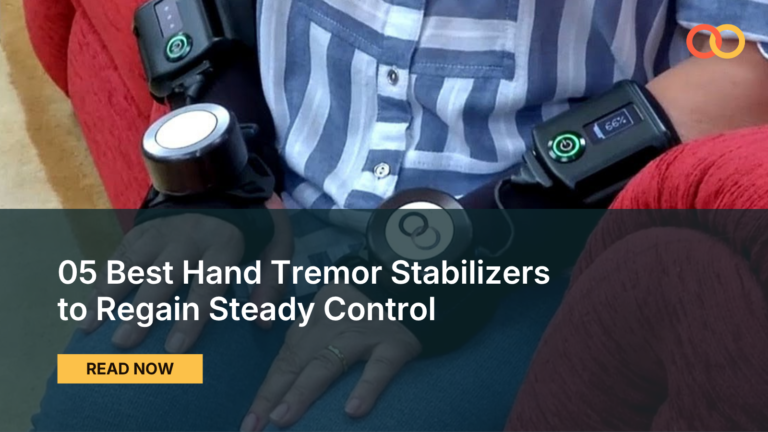
For appropriate users whose tremor affects functional hand activities, GyroGlove is a non-invasive wearable designed to support hand stability during selected everyday tasks. It does not diagnose, cure or treat the underlying cause of tremor, so suitability depends on the individual’s tremor pattern and functional needs.
Read more: How to Choose the Right Hand Tremor Stabilizer for Your Condition, Severity, and Daily Needs
When Should You See a Doctor About Hand Tremors?
A new, persistent, worsening or unexplained hand tremor should be medically assessed, especially when it begins affecting daily activities or appears with other neurological symptoms.
Assessment is particularly appropriate when:
- Tremor is persistent or progressively worsening
- Tremor begins after a medication change
- Eating, drinking, writing or work becomes difficult
- Other movement or neurological symptoms appear
A healthcare professional may assess when the tremor occurs, which body parts are involved, medication history, associated symptoms and how the tremor behaves during rest, posture and movement.
Treatment can then be matched to the likely cause instead of being chosen solely because the hands are shaking.
Read more: How Gyroscopic Stabilization Works to Reduce Hand Tremors in GyroGlove™
Can Hand Tremor Be Managed Even If It Does Not Fully Stop?
Yes. Tremor can often be managed through symptom reduction, task adaptation and functional support even when some shaking remains.
The practical objective is not always a completely still hand. Better control, easier daily tasks and less functional disruption can still represent meaningful improvement.
There is no single way to stop every hand tremor. The most effective approach depends on the cause, tremor pattern and functional impact, ranging from reducing aggravating factors to medical treatment and task-specific support. Persistent, worsening or function-limiting tremor should be medically assessed.
This article is for educational purposes only and does not replace professional medical advice, diagnosis or treatment.